Stream RCM helps doctors, clinics and group practices in Kansas get claims paid on time. Our professional billers and coders take care of your billing from start to finish. We review insurance, code visits, send claims, fix denials and follow up on unpaid claims.
Every day, our staff in Kansas works with Medicare, KanCare, and private health insurance. As a result, your employees will spend less time in billing. Every month, you get a straightforward statement that lists all of the responsibilities that were billed for, paid for, and still owed. The initial cost is 2.99% of monthly collections.

Stream RCM helps Kansas doctors, clinics, and group practices get paid on time. Our billers and coders handle the full billing process, from checking insurance and coding visits to submitting claims, resolving denials, and following up on unpaid balances. We work with Medicare, KanCare, and private insurers, giving your staff more time for patients. You also receive a clear monthly report showing what was billed, paid, and still outstanding. Our rates start at 2.99% of monthly collections.
Medicaid in Managed Care
Child Enrollees
KanCare Health Plans

Every specialty has its own billing rules. Stream RCM supports more than 50 specialties, adjusting our process to the codes and payer requirements your practice uses. For cardiology and radiology, we check modifiers 26 and TC and imaging authorizations. For surgery and orthopedics, we track global periods to avoid billing for included follow-up visits. We match behavioral health session times with documentation and review KanCare, CHIP, and vaccine claims for pediatric practices. Our team reviews these requirements with your providers and checks claims for common errors before submission.
Stream RCM has more than 15 years of experience in medical billing. Our AAPC-certified billers and coders work with more than 50 specialties and 99% of our claims are accepted on the first try. We follow HIPAA rules to keep patient data safe and our fees start at 2.99% of monthly collections.
The claim numbers are averages across our clients. Your results will depend on your specialty, your payers and how your billing works today. So we start every new account by looking at your current numbers.
Every claim goes through the same nine steps before it gets paid. A mistake at any step can delay your payment. This is how we handle each one for Kansas practices.
Many denials start at the front desk. A wrong date of birth, an old member ID or a typo in the name can get a claim rejected. In Kansas, the plan name needs a close look too. A Blue Cross patient from Wichita has Blue Cross and Blue Shield of Kansas, but a Blue Cross patient from Olathe most likely has Blue KC. A KanCare patient who had Aetna before 2025 is now with a different plan. We check these details before the visit is coded, while the patient is still easy to reach.

Before each visit, we make sure the patient's insurance is active. We also confirm copays, deductibles, referrals and whether the service needs approval first. This is very important for KanCare patients. Medicaid coverage has to be renewed and if a patient misses the renewal, coverage can end without your office knowing. State data shows KanCare enrollment in September 2026 was about 1.8% lower than a year before. Starting January 1, 2027, a federal change also shortens how far back Medicaid coverage can begin for new applicants. Checking insurance when the visit is booked and again at check-in, stops most of these problems.

Our certified coders pick CPT, ICD-10-CM and HCPCS codes based only on what the provider wrote in the chart. We make sure the diagnosis supports the service and add modifiers where they are needed. We also check each claim against NCCI edits, the federal rules that stop certain codes from being billed together. Medicare and KanCare both use these edits. If the notes don't support a code, we ask the provider instead of guessing.

You only get paid for what's on the claim. Common misses include injections, supplies, add-on codes and in-office tests. We compare the visit notes and orders with the charges in your system. For practices that do a lot of procedures, we also check units and add-on codes. This takes a few minutes per visit and often finds money that would have been lost.

Before we send a claim, we check the provider's NPI, taxonomy code, place of service, payer ID and any approval numbers. KanCare has one extra rule. Every provider who bills a KanCare plan must also be enrolled with KMAP, the Kansas Medicaid program. If that enrollment is missing or expired, the claim can be denied even if everything else is right. We keep track of each provider's KMAP status so this doesn't happen.

We send claims electronically and route each one to the right place: WPS for Medicare, the patient's KanCare plan for Medicaid and the correct Blue plan or private insurer for everything else. If a claim is rejected, we fix it and send it again right away. A rejected claim doesn't count as received, so the filing deadline keeps running. Medicare usually gives you 12 months from the date of service to file. KanCare plans and private payers set their own deadlines and we track each one.

When payments come in, we post them, record the insurance adjustments and move what the patient owes to their account. This is also where underpayments show up. KanCare plans must pay their in-network providers at least the state Medicaid rate and private plans must pay what your contract says. If a payment comes in too low, we follow up instead of writing it off. Across our clients, 90% of claims are paid within 30 days, though this changes from payer to payer.

We review every denial, fix what we can and send appeals with the right records when the payer made a mistake. Kansas has two laws that help practices get paid on time. Under the Kansas Health Care Prompt Payment Act, fully insured health plans must pay or deny a clean claim within 30 days. If they're late, they owe 1% interest per month. Under K.S.A. 39-709f, KanCare plans must handle clean claims within 30 days and all claims within 90 days or pay 12% interest per year. We watch these deadlines and follow up on late claims. Across our clients, we've cut denials by up to 75%.

Every month, you get a report broken down by payer, provider and location. It shows your clean claim rate, the main reasons for denials, how long claims take to get paid and your total collections. For example, the report might show that one private plan keeps asking for medical records or that one CPT code causes most of your denials. That tells us what to fix next. Our clients have seen collections go up by 40 to 50% and we always compare your results with where you started.


Running billing in-house costs more than a salary. You also pay for benefits, training, software, clearinghouse fees and backup when your biller is out. In smaller Kansas towns, it can be hard to hire an experienced coder and one person leaving can slow down your claims.
When you outsource medical billing services in Kansas to Stream RCM, you pay one fee based on what you collect. Across our clients, we see a 99% clean claim rate, up to 75% fewer denials, 40 to 50% higher collections and 40 to 50% lower costs. Your results will depend on your practice size, specialty, payers and starting point.
| What You're Comparing | In-House Billing | Outsourced to Stream RCM |
|---|---|---|
| Staff | Salaries, benefits, hiring, training and backup | Certified billing team with one account manager for you |
| Claim quality | Depends on one or two busy people | 99% clean claim rate |
| Denials | Worked when staff have time | Every denial reviewed, appealed and tracked against Kansas payment deadlines |
| KanCare and payer rules | Staff keep up with three KanCare plans, WPS and private payers on their own | We track payer rule changes and KMAP enrollment for you |
| Cost | Fixed payroll and software costs every month | Fees from 2.99% of monthly collections, with 40 to 50% savings |
| Reports | Only what your system and staff can pull | Monthly reports on claims, denials, payments and unpaid balances |
One team handles your billing, coding, denials, unpaid claims and credentialing.
We check each claim, send it and follow it until it's paid. If a claim is rejected, we fix it and send it again. Claim Submission Services
Certified coders choose CPT, ICD-10-CM and HCPCS codes and modifiers from the provider's notes, then check them against NCCI edits. Medical Coding Services
We find out why a claim was denied, fix or appeal it and change the step that caused it so it doesn't happen again. Denial Management Services
We work unpaid claims by payer and amount, call payers about stuck claims and follow up on late claims. Using Kansas payment laws. AR Follow-up Services
We handle CAQH, Medicare enrollment, KMAP enrollment and credentialing with each KanCare plan and private payer. We also keep track of renewal dates. Provider Credentialing Services.


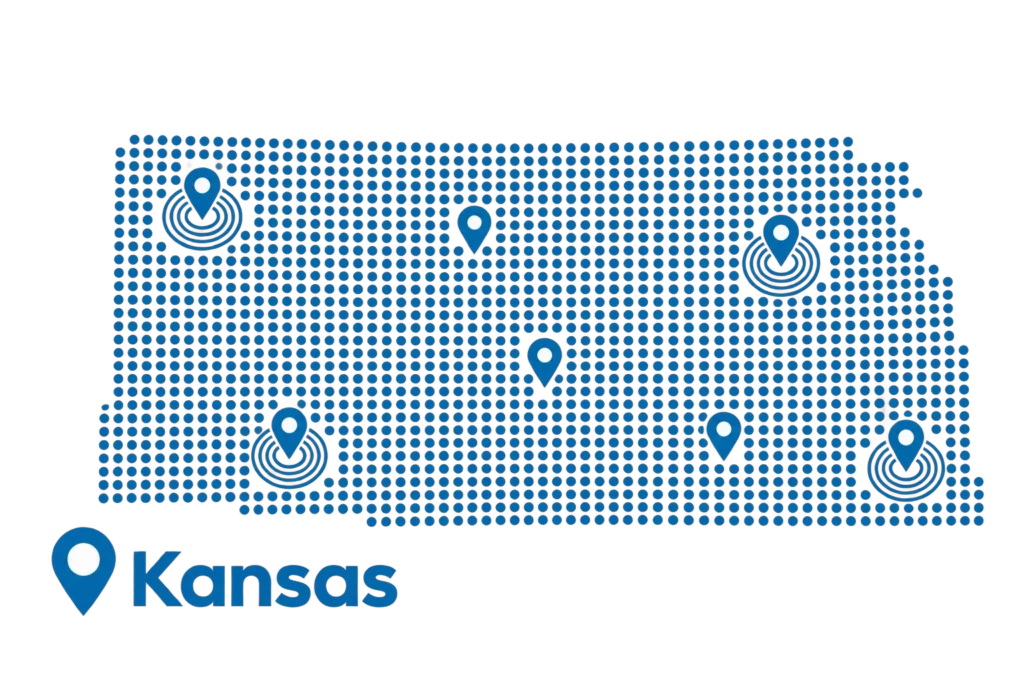
Kansas has 105 counties and where your patients live can change how you bill. Blue Cross and Blue Shield of Kansas covers 103 counties, while Johnson and Wyandotte counties are covered by Blue KC. Age also differs a lot by county. In the 2020 Census, 16.7% of Kansans were 65 or older, but some counties were under 10% and others were over 20%. We bill remotely through your EHR and payer portals, so we can support practices in any county.


Johnson County practices verify Blue KC coverage, check payer requirements, and review claim details before submitting insurance claims.

Sedgwick County had 523,824 residents in 2020, and Wichita practices regularly handle Medicare and private health insurance claims.

In Shawnee County, 19.1% of residents were 65 or older in 2020, making accurate Medicare billing especially relevant.

Wyandotte County had 169,245 residents in 2020, and local practices verify Blue KC coverage before each claim submission.

Douglas County practices in Lawrence check coverage for students moving between family, university, and employer health insurance plans.

Leavenworth County had 81,881 residents in 2020, and local practices handle Medicare, KanCare, and private health insurance claims.

Riley County had 71,959 residents in 2020, and Manhattan practices verify coverage for patients with frequently changing insurance.

Butler County practices serving El Dorado and Andover handle Medicare and private insurance claims with careful payer-specific checks.

In 2020, 20.5% of Reno County residents were 65 or older, making Medicare billing relevant to local practices.

Saline County had 54,303 residents in 2020, and local practices check Medicare and secondary insurance before submitting claims.

Crawford County had 38,972 residents in 2020, and local Pittsburg practices handle Medicare, KanCare, and private insurance claims.

In Finney County, 7.4% of residents were under five in 2020, making children's insurance coverage checks especially important.

In Ford County, 8.3% of residents were under five in 2020; practices check children's coverage and vaccine codes.

In Geary County, 9.9% of residents were under five in 2020, making accurate dependent coverage checks particularly important.

In Harvey County, 20.9% of residents were 65 or older in 2020, making accurate Medicare billing especially relevant.

Across our clients, Stream RCM reports a 99% clean claim rate, up to 75% fewer denials, 40 to 50% higher collections and 90% of claims paid within 30 days. These are company numbers, not a promise for every practice. We track your results against your own starting point from the first month.
We handle every step of billing: checking patient details and insurance, coding, entering charges, sending claims, posting payments, fixing denials, following up on unpaid claims, credentialing and monthly reports. You can use the full service or only the parts you need, like coding or cleaning up old unpaid claims.
We bill all three KanCare plans: Healthy Blue, Sunflower Health Plan and UnitedHealthcare Community Plan. We also bill KanCare fee-for-service claims through KMAP. Any provider who bills a KanCare plan must be enrolled with KMAP, so we check this before sending claims.
WPS handles Medicare Part A and Part B claims for Kansas, Iowa, Missouri and Nebraska. Medicare Advantage claims go to the patient’s private plan instead. We confirm which one applies when we check insurance.
Fully insured health plans must pay or deny a clean claim within 30 days. If they ask for more information, they have 15 days after they get it. Late payments earn 1% interest per month. KanCare plans must handle clean claims within 30 days and all claims within 90 days. Self-funded employer plans follow federal rules, not these state laws.
Often, yes. Johnson and Wyandotte counties use Blue KC instead of Blue Cross and Blue Shield of Kansas, which changes the payer ID and claim rules. Practices near the state line may also see Missouri Medicaid patients. Those claims go through Missouri’s program, not KanCare.
Kansas has not expanded Medicaid, so the new federal work rules for expansion adults don’t apply to most KanCare members. One change does matter, though. Starting January 1, 2027, federal law shortens how far back Medicaid coverage can begin for new applicants. That makes insurance checks at the time of the visit even more important.
Our fees start at 2.99% of monthly collections. Your rate depends on your specialty, how many claims you send and the services you choose. When you compare medical billing companies in Kansas, ask about their clean claim rate, their reports and what the fee includes.
Yes. We work inside the EHR and practice management system you already use, including eClinicalWorks, athenahealth, NextGen, AdvancedMD, Kareo, DrChrono, CureMD and CollaborateMD. We confirm access and setup during onboarding.

Send us a recent set of claims and denials. We’ll show you where payments are getting stuck and how to fix them.
Get a complimentary billing audit and discover potential revenue leaks, claim issues, and missed opportunities affecting your practice.
Find areas where your practice may be losing collectible revenue.
Get insights into your current billing and claims process.
Receive your audit without committing to a service.
Complete the short form and our billing team will review your request.