Stream RCM is a medical billing company in Michigan which provides an organized revenue cycle support for practices dealing with commercial insurance, Medicare, Medicaid, Healthy Michigan Plan, and other payer requirements. Workflow processes include eligibility, coding, claims, payment posting, denials, and reporting. CHAMPS is used by MDHHS for provider enrollment, eligibility, prior authorization, claims, encounters, and payments. The process is accurate for all providers who participate in the program.

Michigan’s billing environment combines multiple coverage structures and administrative requirements. Medicaid providers must maintain active CHAMPS enrollment, while claims may require correct NPIs, TIN information, eligibility verification, authorization evidence, coding, and supporting documentation. Michigan’s clean-claim framework also establishes a 45-day payment requirement for qualifying clean claims under applicable plans. Michigan’s 2024 insurance profile included approximately 5.2% uninsured residents, 16.3% Medicaid coverage.
Uninsured population
Medicaid population share
Employer coverage share

Michigan’s healthcare market includes large hospital systems, independent physician groups, rural practices, specialty clinics, behavioral health providers, rehabilitation organizations, and community-based healthcare organizations. Stream RCM can structure billing workflows around the documentation and coding requirements of each specialty, while accommodating payer-specific procedures and authorization requirements. The Michigan Medicaid provides provider-specific information regarding the process of billing and reimbursement with respect to physicians’ office, clinic, hospital, FQHCs, RHCs and other providers. The specialist-oriented services that we provide could be primary care, internal medicine, cardiology, orthopedic, dermatology, gastroenterology, neurology, behavioral health, physical therapy, occupational therapy, pain management, surgical specialties, radiology, and many more.
There are over 222,000 workers working in Michigan hospitals; also, an MHA workforce survey found that there were almost 58,000 jobs being done by employees in the year 2024. In addition to this, Michigan has the CHAMPS system which is a Medicaid system that follows certain rules.
Stream RCM is one of the medical billing companies in Michigan that organizes revenue cycles from front-end verification through financial reporting. The flow will take into consideration CHAMPS requirements, payer requirements, claims submission guidelines, payment posting, appeals, and patient billing. The Michigan Medicaid program implements claims and payment processes using HIPAA compliant ASC X12 Version 5010 transactions.
Eligibility verification establishes whether the patient has active coverage before services are billed. Michigan Medicaid and Michigan medicine billing specifically instructs providers to verify beneficiary eligibility, while CHAMPS provides online eligibility verification capabilities. We review demographic information, payer details, coverage status, and applicable plan information before downstream billing activity begins.

Prior authorization can affect whether certain services qualify for reimbursement. Michigan's CHAMPS platform includes prior authorization functionality, while Michigan clean-claim requirements recognize authorization information as part of qualifying documentation where authorization is required. Our team tracks authorization status and connects relevant documentation with claim preparation.

Accurate billing depends on documentation that supports the service reported. Michigan's clean-claim definition includes information establishing medical necessity, when necessary, service details, provider identification, patient information, coding, and supporting documentation. We review documentation relationships before claims enter submission workflows.

Charge capture connects completed services with the charges ultimately submitted to payers. A controlled process checks service dates, locations, providers, procedures, modifiers, and documentation relationships. This helps identify missing or inconsistent charge information before a claim is transmitted and creates a more traceable connection between clinical activity and revenue-cycle records.

Medical coding converts clinical procedures to coding for billing purposes. Our team reviews coding accuracy against available documentation and applicable payer requirements before submission. Michigan Medicaid maintains provider-specific procedure-code and reimbursement resources, with policies and fee information subject to updates, making ongoing reference to current payer guidance important.

Electronic billing is supported under Michigan Medicaid via HIPAA compliant ASC X12 Version 5010 transactions. CHAMPS also permits direct claims submission, batch submissions, claim status checks, adjustment, voiding, and payment status functions. We employ a controlled process of submission and tracking that provides visibility from claim submission through payers’ adjudication.

Requests for more information may be necessary when the payer's response suggests incomplete information, problems in the billing process, or any other problems related to adjudication. Our team tracks the status of the claim and the payer's response to separate those claims that are pending from those that are denied or disputed payments.

Steps involved in denial management include determining the reason behind the denial and then matching it with documentation, coding, authorization, eligibility, or claims submission problems. Our medical billing and coding Michigan help in identifying denial actions, prioritizing actions related to the accounts, assisting in resubmission or appeal process of the claim, and more.

Payment posting must establish an accurate association between payer remittances, the billed service, contractual adjustment, patient responsibility, and balance due. We compare the payment data to account data and uncover any inconsistencies. Michigan CHAMPS has payment status functions available, whereas MDHHS provides billing and reimbursement resources.

An internal billing department requires recruitment, training, supervision, software, compliance processes, and coverage for staff turnover. Outsourcing transfers defined billing functions to a specialized revenue-cycle team. Michigan’s administrative environment includes CHAMPS enrollment, electronic claims, authorization, eligibility, and payment processes, while clean claims can be subject to a 45-day payment standard under applicable rules.
| Important Factor | In-House Billing | Outsourced Billing |
|---|---|---|
| Staffing | Internal hiring and training | Dedicated external billing specialists |
| Technology | Practice-funded software and maintenance | Specialized billing technology and workflows |
| Payer Knowledge | Built internally over time | External team with payer-focused processes |
| Scalability | Requires additional internal staffing | Capacity can expand with billing volume |
| Revenue Oversight | Practice manages reporting internally | External reporting with defined performance metrics |
Stream RCM is a billing company in Michigan which combines front-end billing controls, coding, claims management, denials, receivables, payments, and reporting into one coordinated revenue-cycle framework for Michigan healthcare practices.
We review claim data, payer requirements, coding relationships, and supporting information before electronic submission to reduce avoidable processing problems.
Coding workflows connect documented services with appropriate billing codes, modifiers, and payer requirements while supporting consistent claim preparation across Michigan.
Denial workflows identify payer explanations, recurring issues, prepare corrective actions, and monitor unresolved balances so recoverable revenue receives structured follow-up.
Accounts receivable workflows prioritize outstanding balances by age, payer response, claim status, and action required to support consistent financial follow-up in Michigan.
Financial reporting organizes billing activity into actionable measures covering claims, payments, denials, receivables, adjustments, and collection trends for practice review.


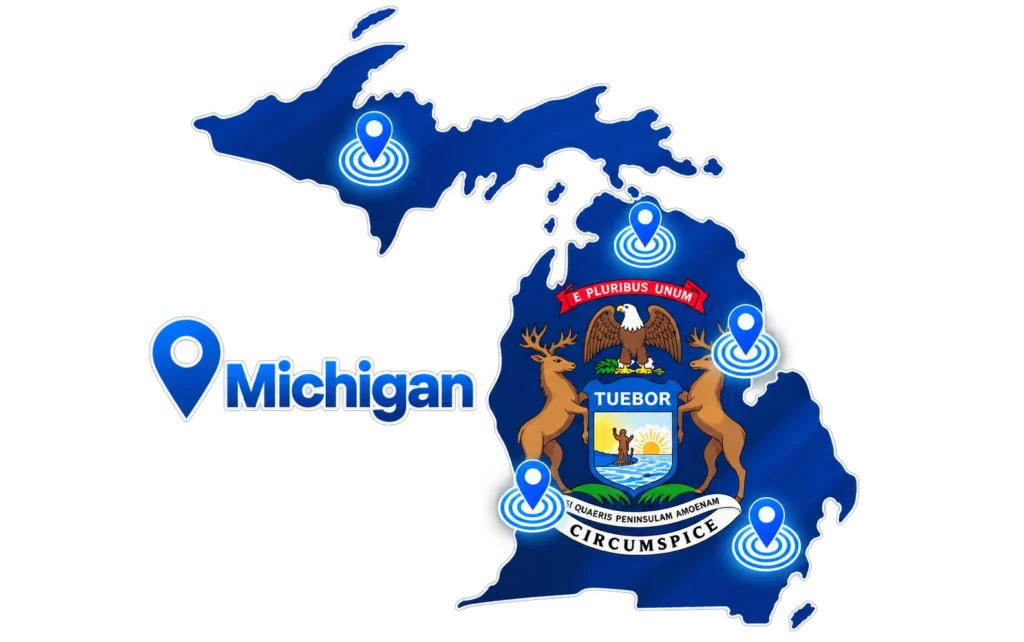
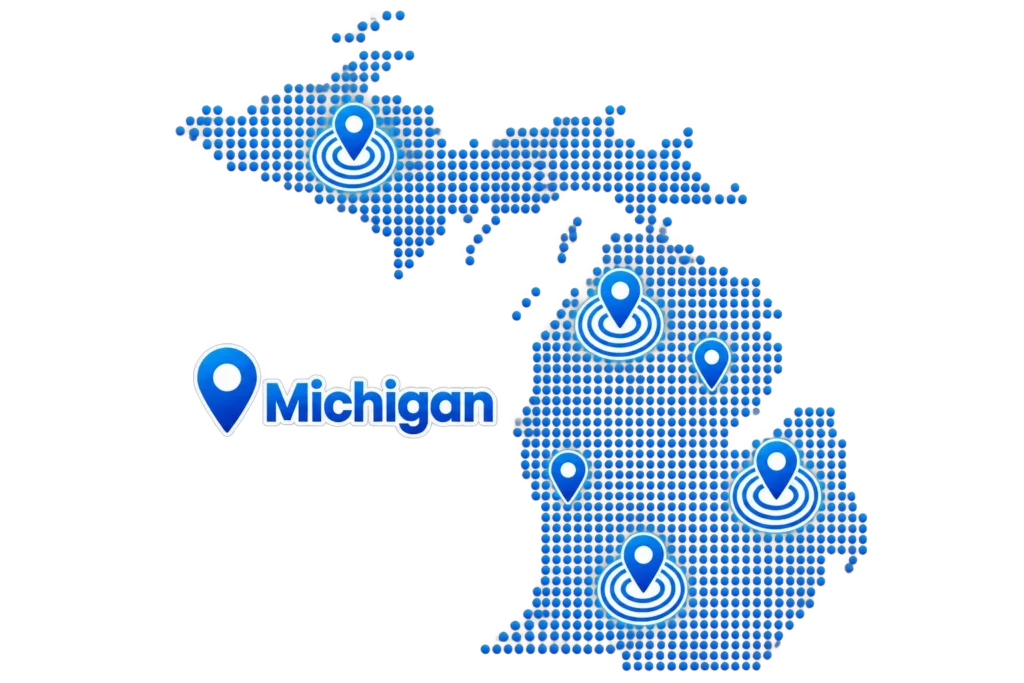
There are 83 counties in Michigan, each having very different health care systems in the cities, suburbs, and rural areas. We providers from all counties can access our Michigan medical billing services easily. The demographic information available for the state indicates that the proportion of the rural population differs quite significantly from one county to another.


Bay County had a 28.94% rural population share in the 2020 Census, requiring billing workflows suited to mixed urban and rural provider operations.

The county's rural population represented 30.10% of residents which highlights geographic disparity that can affect provider medical access and workflows.

Calhoun County noted a 32.34% rural population share which creates a mixed healthcare environment requiring adaptable revenue-cycle support.

Cass County was 74.10% rural by population in 2020, illustrating the substantial geographic variation within Michigan's healthcare delivery landscape.

Clinton County had a 51.32% rural population share, making consistent remote billing coordination valuable for distributed provider medical operations.

Eaton County's rural population accounted for 37.98% of residents, reflecting a blended healthcare market between metropolitan and rural communities.

Genesee County contained almost 18.20% of its population in rural areas or regions and comprised both clusters of population and dispersed population.

Grand Traverse County described 43.17% of its population as rural and provided healthcare access to a diverse geographic territory and regions.

The County's rural population represented 14.57% of residents, demonstrating the county's predominantly urbanized but geographically varied healthcare market.

Lapeer County had an 85.95% rural population share in 2020 which emphasizes the significance of walkable administrative support across dispersed practices.

Leelanau County recorded an 87.58% rural population share which is among the highest proportions reported for Michigan's partially rural counties.

Livingston County had a 39.51% rural population share, requiring revenue workflows capable of supporting both growing communities and rural practices.

Midland County recorded a 43.22% rural population share, illustrating a substantial rural component within its broader regional healthcare practice market.

Saginaw County had 32.62% of its population living in rural areas, and therefore required flexible workflow management in varying provider sites and patients.

The rural population of Washtenaw County was 17.19% which comprises both densely populated and rural areas, hence flexible billing management and workflow.

Stream RCM uses measurable revenue-cycle indicators to strengthen billing performance for Michigan practices. Our structured workflows focus on cleaner claims, faster issue resolution, stronger payment visibility, and better control of outstanding receivables. Michigan’s 2024 coverage profile included 52.1% employer coverage and 16.3% Medicaid, making payer-specific billing oversight essential for consistent financial performance. Practices can track billing activity through meaningful measures including claim accuracy, denial trends, payment turnaround, accounts receivable aging, and collection performance.
The billing services firm is capable of handling the areas of eligibility, authorization management, coding, claims submission, payment posting, denied claim management, AR management, patient billing, and reporting among others. The actual billing services offered are dependent on the type of specialty and other factors.
Yes. Providers serving Michigan Medicaid beneficiaries generally must be screened and enrolled through CHAMPS to receive reimbursement for covered services. MDHHS provides separate enrollment pathways for individual, group, facility, rendering, servicing, and billing-agent arrangements.
Michigan’s clean-claim requirements include provider and patient identification, service details, coverage eligibility, medical-necessity information, when necessary, authorization information when required, recognized procedure coding, and supporting documentation. Qualifying clean claims generally must be paid within 45 days under applicable requirements.
Yes. MDHHS allows billing agents to handle electronic Medicaid claims after required authorization and business-to-business testing. Providers must authorize the billing agent to submit claims electronically on their behalf.
Yes. Michigan Medicaid uses HIPAA-compliant ASC X12 Version 5010 transactions for electronic claims, payments, and enrollment transactions. CHAMPS also supports batch submissions, direct data entry, claim status, adjustments, voids, and payment-status functions.
Payer mix influences eligibility checks, authorization requirements, claim routing, reimbursement rules, patient responsibility, and follow-up requirements. Michigan’s 2024 coverage profile included employer, Medicaid, Medicare, individual, and uninsured populations, creating different administrative requirements across patient accounts.

Connect with Stream RCM for an organized billing support built around Michigan payer requirements, practice workflows, claims accuracy, denials, and reporting.