- +1 (773) 985-1869
- info@stream-rcm.com
- 14430 Ocean Point, El Paso, TX 79938



 Patient Eligibility
 Prior AuthorizationAccurate Medical
 Charge Entry
 Claims Scrubbing
 Payer Adjudication
 Denial Management
 Payment Posting Reconciliation
 Reporting Performance Analysis
Before a claim is ever filed, we verify patient eligibility directly with Illinois Medicaid, Medicare, and commercial payers. This step confirms active coverage, managed care assignment, and remaining benefit limits, which is critical given that Medicaid and Medicare make up between 30 and 40 percent of hospital revenue statewide, and more than half of revenue at safety net and critical access facilities. Catching eligibility issues before service prevents costly denials later, protects patient financial responsibility disclosures required under Illinois law, and keeps downstate and Cook County practices moving efficiently through the revenue cycle from the first visit.

Illinois HFS and commercial payers increasingly require prior authorization for imaging, specialty referrals, and certain procedures. Our team tracks payer specific authorization rules across managed care organizations operating statewide, submitting requests promptly and following up before appointments occur. With Illinois hospitals facing an estimated four billion dollars in reduced Medicaid revenue tied to new state directed payment caps, avoiding authorization related denials has become financially essential. Our team documents every approval, monitors expiration windows, and escalates delayed responses so Illinois practices never lose reimbursement to a missed authorization step, regardless of specialty or location.

Correct coding is essential in order to ensure clean claim submissions. Our group of coders will use the updates that were made in January of 2026 to the Illinois HFS Practitioner Fee Schedule in regards to coding CPT and HCPCS codes according to their global, professional, and technical components. This is especially true for critical access hospitals that have very stringent criteria and low volume of patients. By reviewing every chart against current fee schedule rules before submission, our coders help Illinois providers avoid the coding errors that account for a significant share of preventable claim denials statewide.

Every claim is reviewed in accordance with the documentation, payer agreements, and Illinois-specific billing rules prior to submission from our system. It involves making sure that the Hospital Uninsured Patient Discount Act requirements are met for eligible patients and that the sliding scale discounts are calculated accurately. The charge review process also uncovers modifier omissions, unit mismatches, and out-of-date fee schedules, which frequently cause underpayment. For Illinois-based facilities who have been forced to absorb the premium increases estimated at around 28.8 percent by 2026, charge review serves as the key safeguarding their revenue from unnecessary billing mistakes.

Before submission, every claim passes through a scrubbing process that checks for missing data, incorrect payer identifiers, and Illinois HFS formatting requirements. Clean claims are then submitted electronically to reduce turnaround time, a critical advantage as Illinois hospitals brace for tighter Medicaid margins under new federal payment caps. The scrubbing process routinely achieves clean claim rates near 96 percent, well above many national benchmarks. Faster, cleaner submissions mean fewer rejections at the clearinghouse level, shorter days in accounts receivable, and more predictable cash flow for practices across Cook County and rural Illinois alike.

Once a claim is submitted, it is monitored via the adjudication process by the Illinois Medicaid managed care organization, Medicare, and commercial carriers. We follow up on the claims every day to ensure that any claims that have been stalled or partially paid get reviewed immediately. This is very essential for safety-net hospitals since their Medicaid payments may constitute more than fifty percent of their revenue. It helps us identify any adjudication problems before remittance advice becomes available to us.

Denial management is where our team delivers measurable results, with clients seeing denial rates fall by an average of 22 percent after onboarding. Our specialists categorize every denial reason, correct root causes, and file appeals within Illinois and payer specific deadlines. Given that new Medicaid state directed payment caps threaten billions in hospital revenue statewide, recovering denied claims quickly has become a priority rather than an afterthought. Appeals are tracked to resolution, and recurring denial patterns are reported back to providers so future claims are less likely to be denied for the same reason.

Proper billing reconciliation helps to bring an end to the whole process by ensuring that there is an alignment of payments received from payers to billing information. We match each payment to the expected reimbursement based on the Illinois HFS and commercial fee schedule to help detect any underpayment that needs to be addressed. The importance of this process is even more emphasized when we look at critical access hospitals, as they are often characterized by low amounts of cash and rely on predictable reimbursement in order to maintain round-the-clock emergency services.

The last stage involves the conversion of the billing information into strategic planning. We offer the practice a regular performance reporting that includes clean claims percentage, denial percentages, number of days in accounts receivable, as well as a payer-specific reimbursements in Illinois. As the cost of premiums is growing and there are changes in the reimbursement limit for the Medicaid program and funding in rural areas till 2026, such a reporting helps practices be prepared for revenue challenges. Instead of getting the raw data, administrators get a clear summary and can plan accordingly.












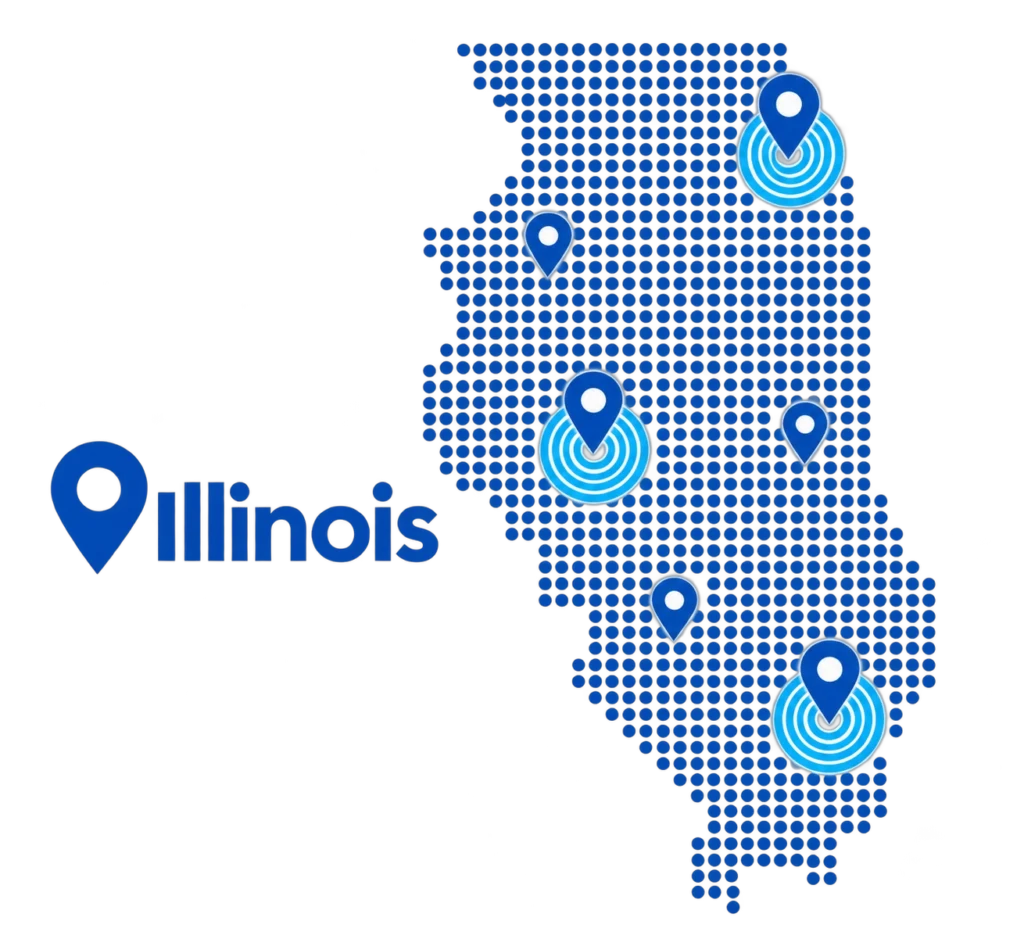

Cook County hospitals, including Chicago's safety net systems, depend on precise Medicaid billing as federal payment caps threaten significant annual hospital revenue.

DuPage County practices serve a dense suburban population requiring efficient commercial payer coordination alongside growing Medicaid care enrollment across the county.

Lake County providers balance strong commercial insurance volume with Medicaid billing accuracy as regional hospital systems expand outpatient and specialty service lines.

Will County's growing population increases demand for accurate credentialing and claims submission across expanding primary care and specialty practice networks.

Kane County practices navigate a mixed urban and rural payer landscape, requiring flexible billing support across Medicaid, Medicare, and commercial insurance plans.

McHenry County providers benefit from consistent denial management as smaller practices compete with larger regional health systems for specialist referral volume.

Winnebago County's Rockford area hospitals manage significant Medicaid patient volume, making accurate HFS fee schedule billing essential to sustaining regional care access.

Madison County practices near the Metro East region require careful coordination between Illinois and cross border Missouri payer billing requirements and rules.

St. Clair County providers serve a Medicaid heavy population which make denial prevention and fast reimbursement critical to maintain stable practice revenue and reimbursement.

Sangamon County's Springfield area hospitals and clinics require precise state government employee insurance billing alongside standard Medicaid.

Champaign County's academic medical presence drives demand for specialty coding accuracy across cardiology, oncology, and complex surgical billing service lines.

Peoria County health systems serve as a regional referral hub which requires a scalable billing support across a wide range of medical specialties and regions across the state..

McLean County providers benefit from consistent claims tracking as Bloomington area practices grow alongside rising regional insurance enrollment and utilization.

Rock Island County practices near the Iowa border manage cross state payer complexity requiring detailed, jurisdiction aware billing knowledge and support.

Kankakee County's smaller practices rely on outsourced billing expertise to compete with larger regional systems while maintaining efficient claims turnaround times.