- +1 (773) 985-1869
- info@stream-rcm.com
- 14430 Ocean Point, El Paso, TX 79938
Stream RCM’s podiatry billing service is based on the precise code rules that apply to nail debridement, diabetic foot care, and regular foot care exclusions. Our coders keep an eye on Q7, Q8, and Q9 modifier guidelines, diagnostic code linkage, and CMS limitations on frequency. Our HIPPA compliant billing company maintains claim denial rates to less than 1%. We handle Medicare DME, ABNs, orthotic billing, and account receivable management services from our complete RCM solution.













We at Stream RCM partner with podiatry clinics ranging from single-provider clinics to multi-location surgical practices and offer podiatric billing services as our specialty in this area. Our coders have been working in podiatry-focused patient charts for several years now, knowing the difference between routine trims and medically necessary nail debridement, between simple strapping and post-surgery wound care visit. This experience is reflected in more accurate claim submissions, less need for documentation, and reimbursement that truly reflects the complexity of the podiatrists’ work. We review all claims for medical necessity, modifiers accuracy and payer frequency limitations and follow the root cause analysis of every denial.
Our podiatry medical billing services are organized along the way that foot and ankle care is actually structured within the practice to make sure that all types of visits fit into an unambiguous and documented claim.
Our coding includes the activity and laterality details that the payers want for overuse injuries, tendon repairs, and return-to-play visits to prevent bundling of our athletic podiatry claims into musculoskeletal codes.

Our coders correctly code the sequencing of diabetes and ulcer codes, record wound depth and size, and combine the CPT codes for debridement with the systemic diagnosis codes that payers require.
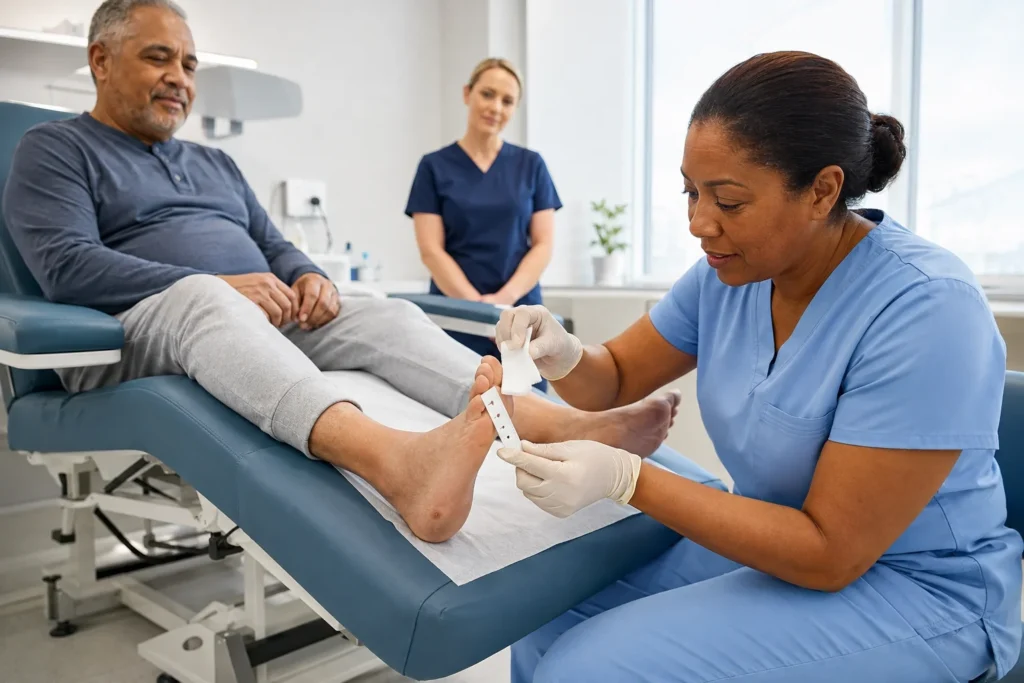
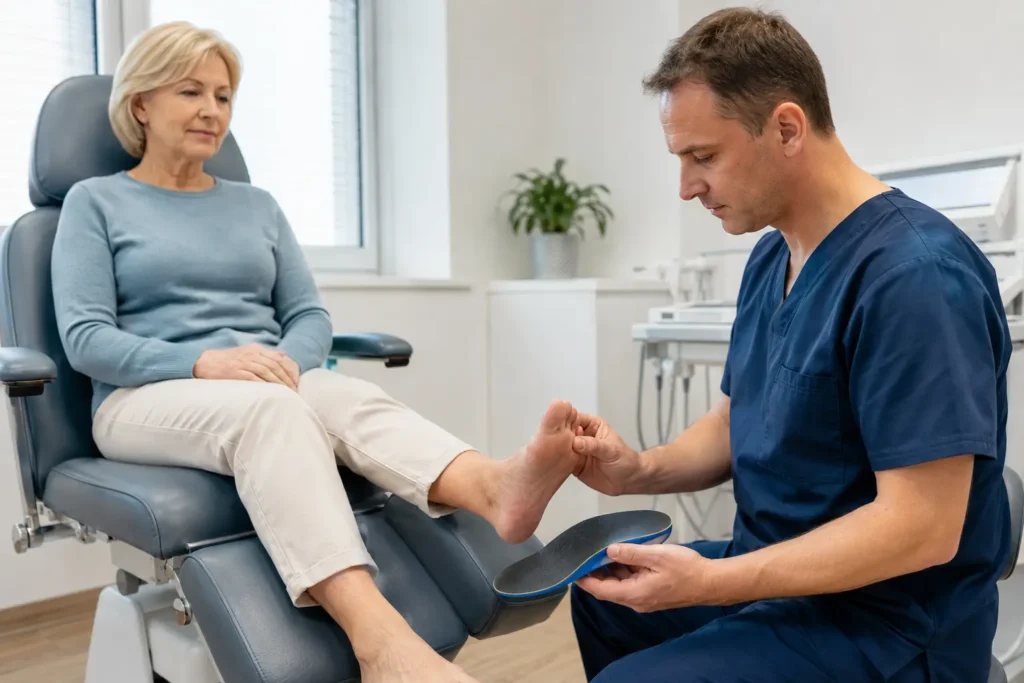
Billing services for durable medical equipment include diabetic shoes (A5500) and orthotics, and we make sure that proper documentation and KX modifiers are in place to avoid expensive denials.

We properly apply Q7, Q8, and Q9 class-finding modifiers to routine and mycotic nail claims, protecting high volume patients from Medicare denials for routine foot care.
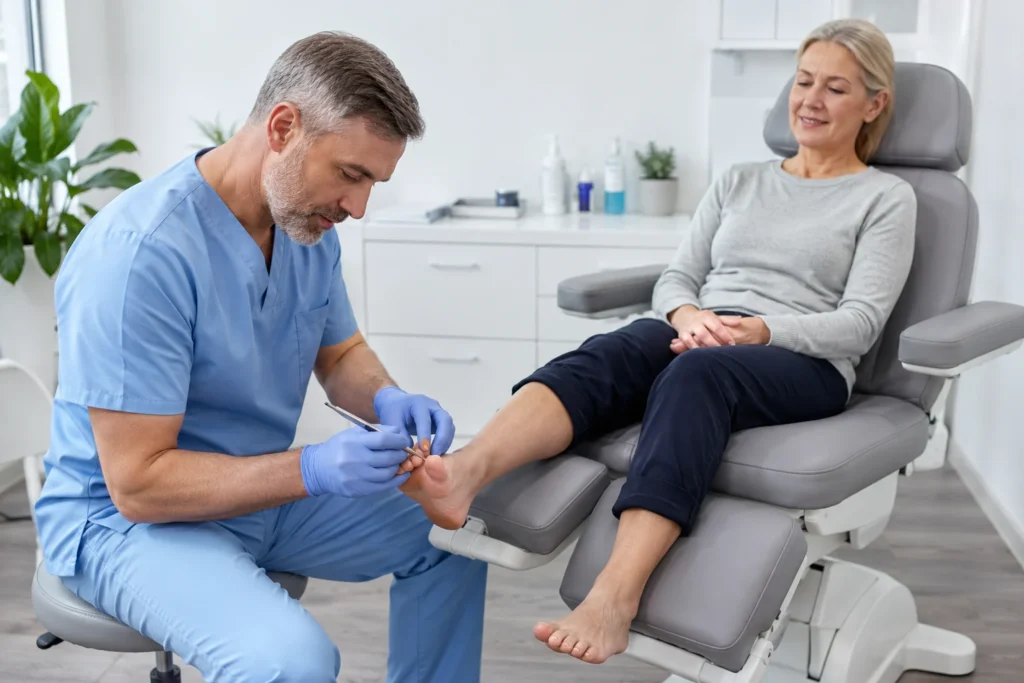
Claims for bunions, hammertoes, and biomechanical correction are coded by our experts with the operative description and severity required for the justification of surgery and orthotics reimbursement.
We provide specialized podiatry billing solutions through our process, backed by AAPC certified podiatry coders. We take care of all aspects of the podiatry revenue cycle in order to increase accuracy and confirm that each claim is safe from audits
Our professional team is in touch with the payers to verify benefits, eligibility, and prior authorizations even before your appointment date to avoid any last-minute surprises that can ruin your practice reputation and your day.
We convert physician’s notes into correct codes of CPT, ICD 10 and HCPCS to document all diagnoses and procedures. We identify the documentation deficiencies in advance to prevent any chances of audit against you.
The claims that our company files are always error-free and have the required modifiers such as Q7/Q9 for routine cases, 59 for different procedures, and 25 for E/M services. We make sure that our claims are thoroughly checked before filing to achieve 100% accuracy.
Every transaction coming from the insurance company and patients is posted to the right account. Our experts identify all underpaid claims and any problems arising from the contract between you and the patients.
If denials happen, we look for the reasons behind it. We have denial experts who will identify the denial trends, fix the coding problems, improve documentation, and fight all unnecessary denials through vigorous appeals.
Your accounts receivable is actively managed by continuous follow-ups on outstanding claims. We focus on high value accounts and make sure that aging claims get escalated and there is continuous contact with the payers in order to reduce your AR days.
You shouldn’t have to juggle Q-modifiers and frequency limits by yourself. Let our podiatry billing company handle the details.

One of the podiatry practices with several offices was having issues with their outsourced billing that was not able to cater to their specific requirements. The problem was having claims that were denied frequently, long AR days more than 60 days, and frustration with the whole process. This practice decided to team up with Stream RCM so that they could be in control of the situation. We carried out an extensive audit for them and found out what their main problems were: wrong use of modifiers and lack of medical necessity documentation. With our specialized processes, we managed to increase the first pass claims acceptance from 75% to 96%, and shortened their AR days. In just six months, their revenue realization rate reached 96%.
In podiatry billing, the proper coding of a procedure with the right diagnosis is a key. Our coders deal with these codes on a daily basis.
| Procedure & CPT Code | ICD-10 Code | Stream RCM's Role |
|---|---|---|
| Nail Debridement (11721) Debridement of six or more nails | E11.621 Type 2 diabetes with foot ulcer | We make sure that the appropriate Q modifier (Q7-Q9) is used and the systemic diagnosis is captured. We confirm that the clinical data (class A, B, or C) for the patient conforms to the high requirements of Medicare for coverage purposes. |
| Wound Debridement (11043)
Debridement into the muscle layer | L97.413 Non-pressure chronic ulcer of right heel and midfoot | Our coding professionals carefully record the level at which tissue was removed and associate it with the proper body part. Physician notes will be carefully checked to ensure that debridement has gone deep enough to affect the muscle layer. |
| Bunionectomy (28296)
Bunionectomy with osteotomy | M20.11 Hallux valgus (acquired), right foot | We verify that the diagnosis code indicates the extent and laterality of the medical condition. We also ensure that the operation report matches the description of the procedure given in the CPT code and use the appropriate surgical modifiers (-RT/-LT). |
| Injection (20550)
Single injection into tendon sheath or ligament | M77.0 Medial epicondylitis | Our team verifies that the injection is medically necessary and not a standard procedure. We check the medical documentation provided by the physician to verify that the diagnosis justifies the injection and then add the proper anatomical modifiers. |
| Hammertoe Correction (28285)
Hammertoe repair | M20.42 Hammer toe(s) of the left foot | Our coders carefully validate the code of the diagnoses with the surgery performed, including the correct toe and laterality. We also examine the application of global period rules and avoid incorrect billing of the post-operative follow-up appointments. |
The biggest change that has come about in the workflow processes of podiatry medical billing companies this year is not the creation of any new procedure codes, but an increasing vigilance by Medicare auditors regarding documentation of already existing class findings. It is now being verified that Q7, Q8, and Q9 class findings are properly documented during the visit itself rather than being presumed based on past patient history from a chart. We automatically reject all foot care claims without an up-to-date systemic diagnosis or class finding prior to submission and send those claims back to the front office rather than allowing them to be rejected. The practices for whom we submit claims have experienced a decrease in the number of routine foot care claims being denied since this check was added to our system.

Our system seamlessly integrates into the existing EHR and EMR software that you use. Our solutions for billing work in the background to help boost your revenue.


Diabetes is rising among a substantial number of adults, and many of these individuals end up developing foot ulcers which in turn require amputation if proper documentation regarding their treatment is not done. It is becoming increasingly strict with regard to documentation needed for limb preservation treatments where it is expected to see documentation about wound staging, vascular status, and progression notes for every claim regarding debridement or advanced wound care procedures. Our team screens all the wounds care episodes according to payer expectations prior to submitting claims to ensure that all the required documentation correlates with the billing codes.
Our company offers customized services that will help you solve all of the most common podiatry billing issues.
Routine care denials because of strict Medicare LCD.
We justify the medical necessity by using appropriate ICD 10 codes (E11.42) and Q modifiers (Q7 Q9).
Inappropriate use of the modifier causing rejection.
Our professionals make sure that the modifiers like 59 for distinct procedures, 25 for E/M services, and LT/RT for laterality are used appropriately.
Diabetic shoes (A5500) and orthotics rejected due to lack of documentation.
We prepare all the CMNs and KX modifiers as part of the initial claim submission.
Inappropriate billing for post-operative care during the global period.
We specialize in the management of the global period and ensure that follow up visits are not billed individually without any justification.
We manage authorizations before surgeries and advanced imaging to avoid delays in treatment.
We do more than billing; we provide revenue cycle management services and become a strategic partner dedicated to making sure that you grow and thrive from a financial perspective.

We focus exclusively on podiatry, meaning we have a deep understanding of your unique billing needs from Q modifiers to complex surgical coding.
Our team has AAPC‑certified coders with specific expertise in podiatry. They understand the clinical language, so they can interpret your charts accurately.
We study the payer behavior patterns in order to prevent denials. We correct the problem right from its root so that you can experience continuous revenue improvement.
You get clear and useful analytics that show how well your revenue is performing through our transparent procedure.
Medicare covers routine foot care only with a qualifying systemic condition, like diabetes or neuropathy, plus a Q-modifier class finding.
Nail debridement uses CPT 11720 or 11721 by nail count, paired with a systemic diagnosis and the correct Q7–Q9 modifier.
We manage diabetic shoe and orthotic billing by confirming diagnosis accuracy, physician prescription on file, and the correct KX modifier.
Most practices transition within thirty to forty-five days, covering credentialing checks, accounts receivable review, and a clean, uninterrupted claims handoff.
A global period is the set days after surgery when related post-op care is bundled, like nail avulsion’s 10-day period.

If denials keep piling up, it might not be your practice, it might be your billing partner. Compare notes with our podiatry billing team.