- +1 (773) 985-1869
- info@stream-rcm.com
- 14430 Ocean Point, El Paso, TX 79938
Skilled nursing facilities run on some of the most layered billing rules in healthcare. It demands balancing between resident care, staffing pressures, and constant payer rule changes.
Stream RCM provides nursing home billing built around these realities, Medicare Part A consolidated billing, MDS-driven reimbursement, and managed care contracts. Our certified team understands the documentation that governs long-term care reimbursement. We reduce denials, recover aging accounts, and stabilize your cash flow. We handle the entire revenue cycle for you.











Nursing homes operate on different rhythms: census changes weekly, MDS assessments drive payment periods, and consolidated billing rules dictate what can and cannot be billed separately. Our team built its processes specifically around those rhythms, training coders on PDPM, RUG transitions, and the documentation trail surveyors expect to see. We work with administrators, business office managers, and Directors of Nursing who need a billing partner that already speaks the language of long-term care, rather than one learning it on the job. Every facility we support gets a named account team rather than a rotating queue of unfamiliar agents, learning your payer mix and census patterns within the first weeks of onboarding. From there, we focus on cleaner claims, faster follow-up, and reporting that actually tells administrators something useful.
We manage Medicare Part A claims under the PDPM framework, validating per diem rates against the resident’s PT, OT, SLP, nursing, and NTA case-mix components before each claim goes out, and confirming variable per diem adjustments are applied correctly across the resident’s stay.

Outpatient therapy, physician visits, and ancillary services billed separately under Part B are coded and submitted with the correct CPT and modifier combinations. We keep these claims aligned with consolidated billing exclusions so they aren’t denied as duplicate services.

We track authorization requirements, length-of-stay approvals, and concurrent review deadlines specific to each MA plan, since these claims don’t follow standard PDPM per diem logic and are a leading cause of underpayment in SNFs.

State Medicaid programs each have their own case-mix systems, patient liability calculations, and level-of-care reauthorization timelines. We track these by state so Medicaid claims aren’t delayed by missed reauthorization windows or incorrect patient liability deductions.

Before submission, we compare each claim against the resident’s most recent MDS assessment to confirm the ARD, PDPM clinical category, and HIPPS code all match what’s being billed for that payment period.

Therapeutic and hospital leave days have their own billing rules and reimbursement limits. We track LOA days against payer-specific allowances so facilities aren’t under-billing covered bed-hold days or over-billing days that exceed policy limits.

From first eligibility check to final payment posting, Stream RCM handles every revenue cycle touchpoint so your facility stops chasing reimbursement and starts collecting it.
Aging balances don't recover themselves. Our AR team works your entire receivable bucket, prioritizing by payer, financial value, and filing deadlines to recover payments sitting beyond 30, 60, and 90 days before they become write-offs.
A single lapsed credential can hold up payments across an entire payer contract. We manage credentialing, re-enrollment, and payer contract setup for your nursing home providers, ensuring no claim is rejected simply because a physician or NPP isn't enrolled correctly.
We confirm Medicare, Medicaid, and managed care eligibility before every claim cycle checking coverage dates, benefit period status, skilled level of care qualifications, and Medicare replacement plan details so billing never goes out against an inactive or incorrect policy.
We run scheduled audits across submitted claims, remittance data, and documentation to identify underpayments, missed charges, and coding inconsistencies before payers or OIG auditors find them first, protecting both your revenue and your compliance standing
Our certified coders handle ICD-10 diagnosis coding, HCPCS Level II, therapy CPT codes, and HIPPS code validation specific to SNF billing, cross-checking every code against MDS assessment data to make sure your PDPM classification is supported by what the documentation actually says.
Every remittance advice is posted promptly and reconciled against expected reimbursement by payer contract. Underpayments, contractual adjustments, and balance discrepancies are identified and resolved by us before they quietly disappear into your write-off column.
Schedule a complimentary review of your claims data and uncover hidden reimbursement opportunities.

A familiar pattern emerges when nursing homes first reach out to us. The business office is capable, the staff is experienced, but billing has quietly become the task that gets done after everything else, after admissions, after family calls, after the afternoon medication round. Claims get submitted, but payments are inconsistent, denials pile up, and the aging report grows month after month with no time left to chase it. Skilled nursing billing is complex, demanding PDPM knowledge, MDS coordination, and careful payer tracking, and piling that onto an already heavy workload means something always falls behind. A dedicated team like ours takes ownership of your revenue cycle, works denials without reminders, and treats AR aging as our own problem, with most facilities seeing a difference within the first billing cycle.
| Code | Type | Description |
|---|---|---|
| 99304–99306 | CPT | We review admission documentation against E/M complexity requirements, assign the correct initial care level, and prevent under-billing or over-billing on Part B claims before submission. |
| 99307–99310 | CPT | Our team audits subsequent visit notes against four complexity levels, catches providers defaulting to the same code habitually, and corrects both upcoding risks and under-coded visits before claims go out. |
| 99315–99316 | CPT | Our billers monitor daily discharges, confirm physician documentation supports the right discharge code, and ensure these billable visits aren't dropped from claims during high-census transition periods |
| 99318 | CPT | We track annual assessment schedules per resident, alert billing teams before visits become overdue, and verify comprehensive evaluation documentation meets payer standards before the claim is submitted. |
| 97110 / 97112 / 97140 / 97530 | CPT | Our coders cross-check therapy minutes against billed units, validate 15-minute increments, and confirm each code supports the resident's PDPM therapy case-mix component before submission. |
Skilled nursing facility billing services exist because the margin for error in long-term care reimbursement is small, and the consequences of getting it wrong compound quickly. One healthcare provider came to us with a denial rate above 20%, most of it tied to MDS assessments that didn’t match billed PDPM components. Within the first month, our team set up a weekly cross-check between clinical documentation and claims before submission. By month three, denials had dropped to single digits, and the facility recovered a significant revenue in claims that had been sitting unpaid for over ninety days. That’s the result when you trust a skilled nursing billing services team like us.

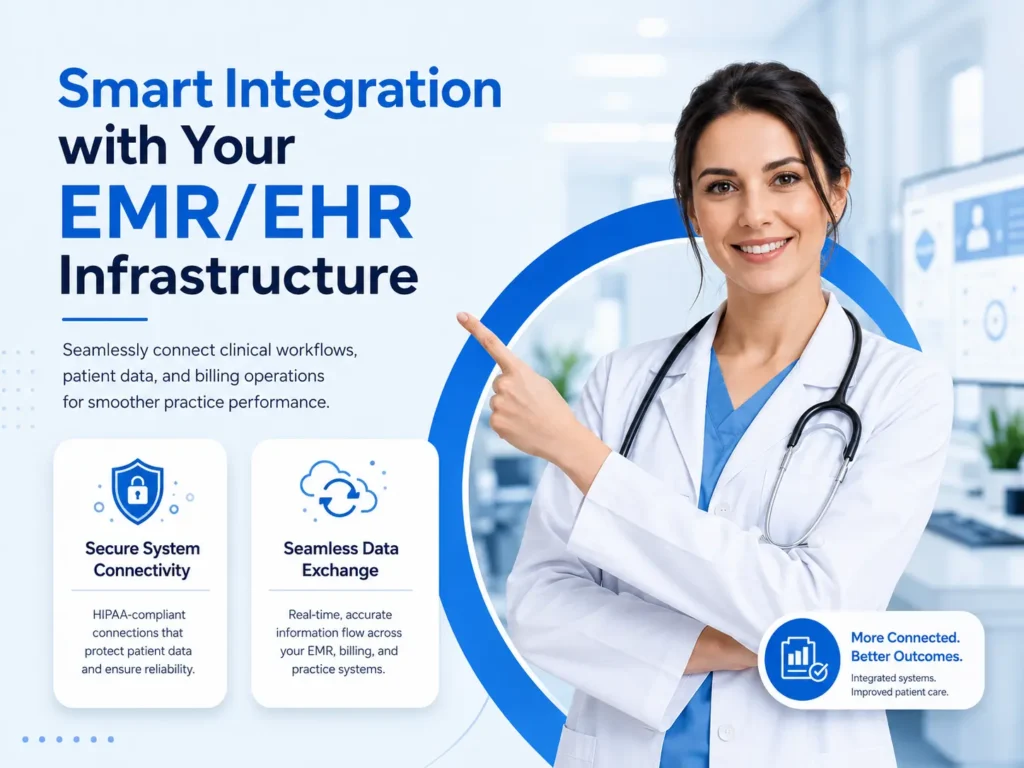
Stream RCM connects smoothly with your existing EMR or EHR. Your documentation stays intact. We simply pull what we need to handle billing, coding, and claims so your workflow remains uninterrupted.

Stream RCM stands as a reliable nationwide partner for nursing home medical billing, providing reliable services nationwide, from the East Coast to the West Coast. We understand that every state has its own Medicaid rules, Medicare Administrative Contractor interpretations, and managed care requirements. That is why we maintain a dedicated team that tracks these variations carefully. We are actively welcoming new clients, including independent physicians, private practices, and skilled nursing facilities across the country. When you partner with us, you get a billing team that knows your state’s specific regulations and handles your revenue cycle with precision and care.
We identify the most frequent claim problems in nursing home billing and provide clear, practical solutions that work every time.
MDS coding errors lead to incorrect PDPM reimbursement and can trigger unwanted Medicare audits across skilled nursing facility billing operations overall.
We review every MDS section carefully before submission, ensuring accurate coding and full compliance with Medicare rules consistently.
Medicaid claims get rejected due to state-specific timely filing deadlines and documentation errors, creating unnecessary revenue delays across facilities nationwide.
Our team tracks each state’s Medicaid deadlines and requirements closely, submitting clean, accurate claims on time consistently.
Therapy minute miscalculations cause Medicare Part A denials and lost reimbursement for skilled services, creating avoidable revenue loss across facilities.
We verify group and individual therapy minutes against MDS data carefully, preventing costly billing mistakes and denials.
Managed care authorizations expire before claims are submitted, resulting in automatic denials and unnecessary administrative rework across nursing home billing.
We track authorization limits and expiration dates closely, renewing approvals proactively before claims are ever submitted.
Aging accounts receivable sit unpaid past timely filing deadlines, leaving revenue permanently lost across skilled nursing facility billing operations overall.
We prioritize AR follow-up weekly, appealing old claims before deadlines expire and recovering revenue that’s rightfully owed.
Our process follows a structured workflow designed to keep claims moving without delays.
We begin by reviewing your current billing setup, payer contracts, and documentation processes, identifying gaps that may be contributing to delayed payments or recurring denials before onboarding begins.
Our team configures workflows around your existing systems, establishes secure data exchange, and assigns a dedicated billing team trained on your facility's specific payer requirements and documentation standards.
Daily charges, MDS data, and clinical documentation are reviewed, coded, and submitted as clean claims, with errors caught and corrected before submission rather than after denial.
You receive ongoing reports covering collections, denials, and accounts receivable aging, along with direct access to your account team for questions or process adjustments anytime.
Yes. State Medicaid programs often have different rules than federal Medicare, especially for long-term care. Our team tracks these differences and adjusts billing processes accordingly, so claims meet each state’s specific requirements without delaying reimbursement or triggering unnecessary rejections.
Our coders cross-check MDS assessments against billed services to confirm PDPM classifications and assessment reference dates align correctly. This catches mismatches between clinical documentation and billed charges before they become denials or post-payment audit findings.
No. You’ll receive regular reports on claims, denials, and collections, along with direct access to your account team. Most facilities find they have more visibility with us than they did managing billing internally with stretched staff.
Yes. Our teams are trained on the distinct requirements for skilled nursing facilities, home health agencies, and related long-term care settings, so documentation, coding, and claims submission match the rules specific to each setting.
Absolutely. We review existing denied and underpaid claims, identify what can still be corrected, and file appeals with supporting documentation where appropriate. Many facilities recover meaningful amounts from claims that had been written off or sitting unresolved for months.

Improve collections, reduce outstanding invoices, and accelerate cash flow with expert-led AR follow-up services.