- +1 (773) 985-1869
- info@stream-rcm.com
- 14430 Ocean Point, El Paso, TX 79938
Neurosurgical procedures have one of the most highly valued reimbursements in medicine. Just a single wrong modifier for either craniotomy or lumbar fusion procedures can be very costly to a practice. Stream RCM’s coding team decodes the operative notes just like a neurosurgeon would. We code exposure, decompression, instrumentation, and closure accurately on the first attempt. All our coding services are performed by specialists in cranial, spine, and peripheral nerve procedures.













Neurosurgery billing often fails because coders lack a deep understanding of neurosurgical anatomy. As a neurosurgery billing company, we built our team differently.Our coders are trained in cranial, spinal, and peripheral nerve procedures, studying operative reports alongside board-certified consultants to learn how surgical approach and closure are bundled, and understand billing logic for craniectomies and craniotomies. Our specialized coding services help ensure these complex neurosurgical procedures are coded accurately. We work with surgical and procedural specialties that require detailed documentation. Every neurosurgeon receives a dedicated coding pod. The team becomes familiar with each surgeon’s operative style and preferred documentation. We review denial patterns every week to respond quickly to payer trends. Our credentialing team keeps enrollment current with Medicare, Medicaid, workers’ compensation, and commercial payers. Practices also receive transparent dashboards with real-time performance data instead of delayed summary reports.
A neurosurgeon practice needs financial strength, which can only be achieved through complex billing for cranial, spine, and peripheral nerve procedures. Partner with us for all your neurosurgery medical billing requirements.
We code craniotomy, craniectomy, and tumor resection procedures. Bundling of approaches and closures is carefully monitored by us. That makes sure that our clients stay compliant and all separately payable components get captured.

Spine codes like lumbar fusion, cervical fusion, and thoracic fusion go through coders who are experienced and knowledgeable about instrumentation, grafting, and decompression order. We bill the spine correctly and use correct modifier logic for the claim.
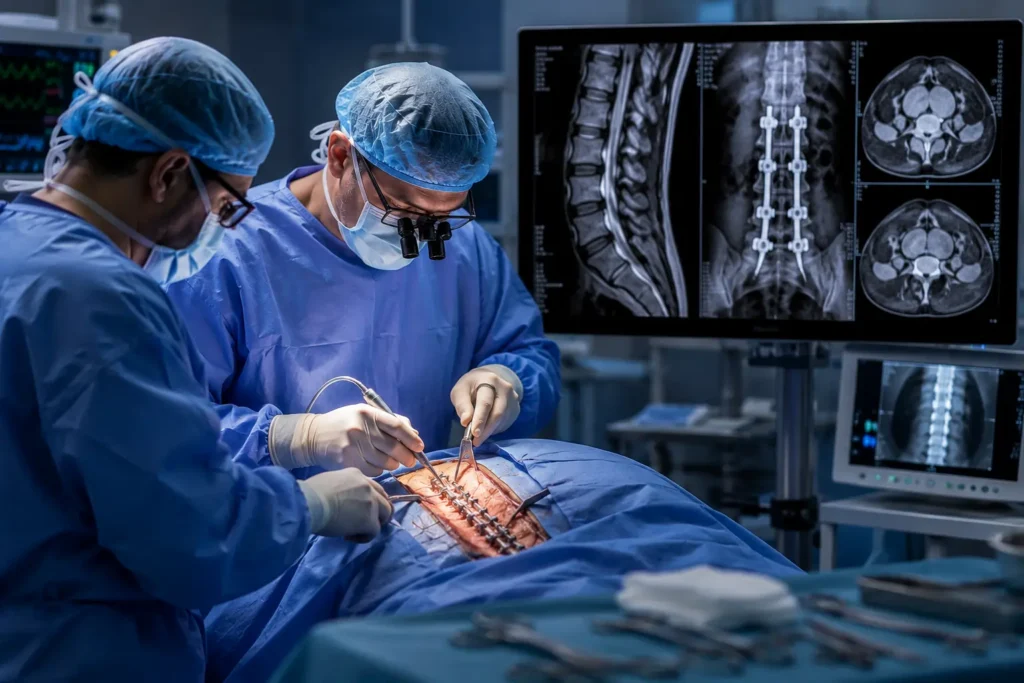
Age modifiers are required for congenital and craniofacial cases. Detailed documentation is also needed for these cases. Our coders of pediatric neurosurgery confirm that there will be no problems with claim submission.

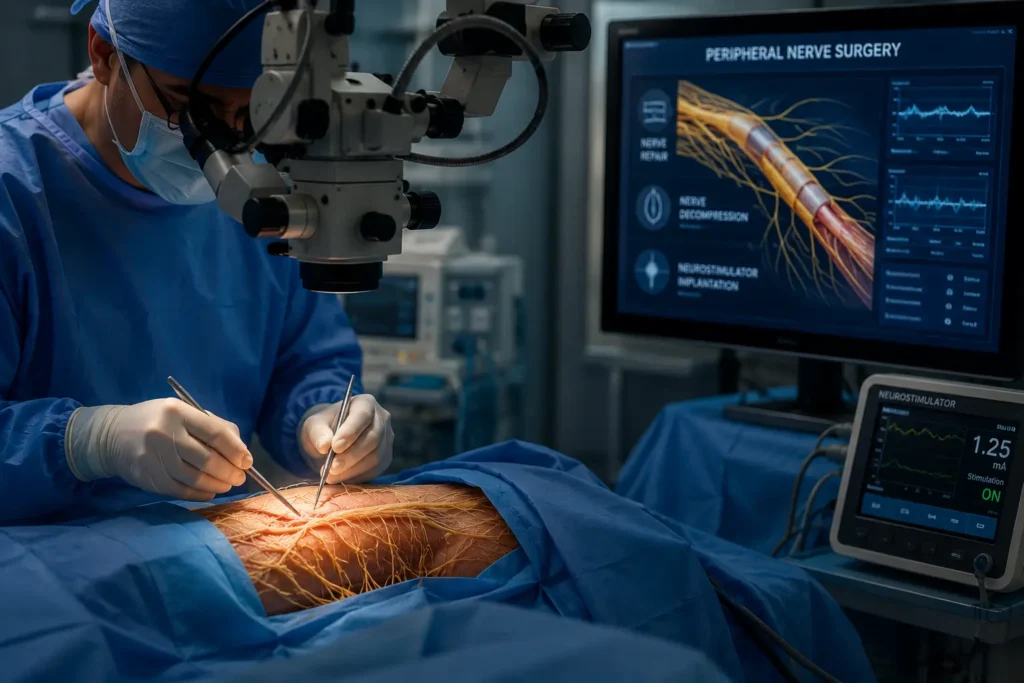
Nerve repair, decompression, and neurostimulator procedures carry strict medical necessity rules. Our team will document these procedures according to the payer policy before submission to verify the claims.
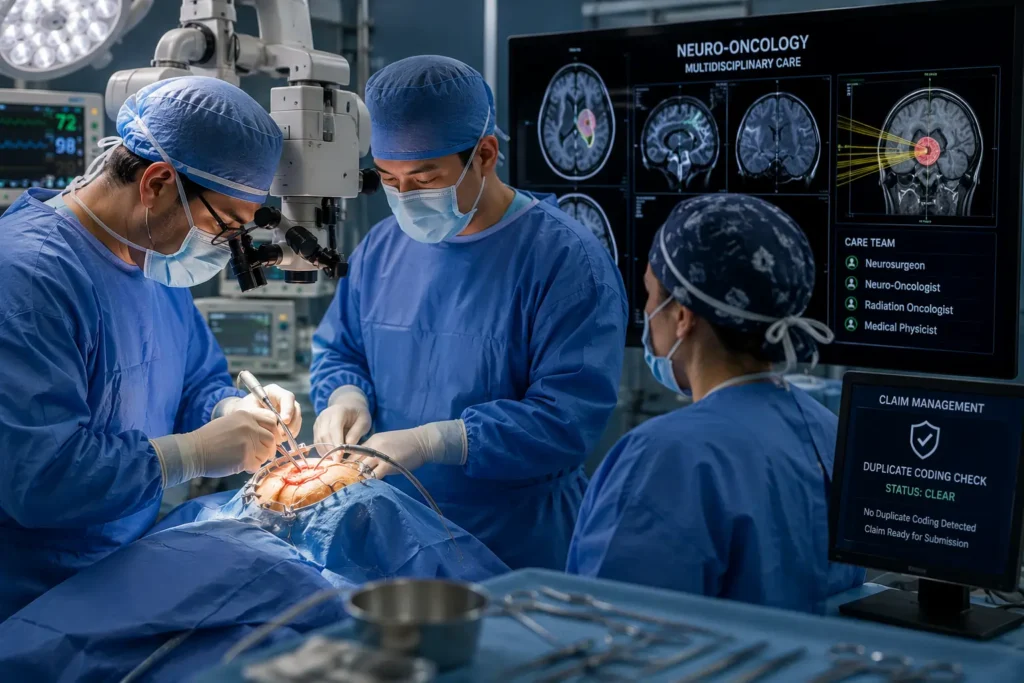
Tumor resection and stereotactic radiosurgery claims often involve multiple specialists. They may bill on the same date of service. We manage the coding process to prevent neuro-oncology claims from facing denial for duplicate coding.
A neurosurgeon practice needs financial strength, which can only be achieved through complex billing for cranial, spine, and peripheral nerve procedures. Partner with us for all your neurosurgery medical billing requirements.
Our experts appeal neurosurgery denials within 48 hours by using payer-specific reasoning. Our targeted approach resolves up to 92% of first-level appeals successfully. This reduces revenue delays and also strengthens long-term payer acceptance.
We pursue neurosurgery claims beyond 60 days aggressively. Persistent follow-up recovers up to 35% more outstanding revenue. This reduces avoidable write-offs. Practices strengthen cash flow without adding staff.
Quarterly chart audits identify undercoding and bundling errors early. Documentation weaknesses are corrected before payer review. Audits reduce compliance risk by nearly 40%. Future clawbacks become far less likely.
Certified coders assign CPT and ICD-10 codes from operative notes. We never rely on templated crosswalks or guesswork. Coding accuracy exceeds 98% consistently. Clean claims reach payers the first time.
Our experts manage payer enrollment and revalidation completely. Credentialing delays are reduced by approximately 50%. Billing privileges remain active across payers. Neurosurgeons avoid costly reimbursement interruptions.
Every remittance is posted and reconciled daily. Payment records maintain more than 99% posting accuracy. Accounts receivable stay current in real time. Practices gain dependable financial visibility.
Our billing experts are now available for assessing your existing revenue cycle process and suggesting the improvement areas.

Neurosurgery practices do not usually have the resources for internal management of their billings. Their day-to-day schedule includes operating, being on call, and attending to patients. Some neurosurgery practices outsource their billing because of increasing claim denials up to 18% because of coding complexity and payer scrutiny. Other practices might need to outsource billings after losing an in-house coder who will be difficult to replace. Our team takes the responsibility for that operational risk and we help reduce denials and accelerate cash flow. We have a contingency plan for our coding pods, as well as keeping up with continuing education and payer policy updates. Our team works as an extension of your practice to make sure every claim is clean and every appeal is compelling.
| Procedure | Coding Detail |
|---|---|
| 61510 / C71.9 Tumor Resection | Craniotomy for tumor excision pairs with malignant brain neoplasm diagnosis codes. Our team verifies laterality and tumor location before submission to confirm accurate claim processing. |
| 63047 / M48.06 Lumbar Decompression | Laminectomy for lumbar stenosis requires precise level documentation. We confirm single versus multi-level coding against the operative report to reduce coding errors and denials. |
| 62223 / G91.9 Shunt Placement | Ventriculoperitoneal shunt creation must link to a documented hydrocephalus diagnosis. Our coders check medical necessity before any claim is filed to support compliant reimbursement. |
| 61850 / G40.909 Neurostimulator Implant | Cortical stimulator placement for refractory epilepsy needs seizure-frequency documentation. We track prior authorization through the entire approval cycle to prevent delays in payment. |
| 63030 / M51.26 Disc Excision | Lumbar discectomy claims pair with intervertebral disc displacement codes. Our team audits laterality and spinal level to stop mismatched diagnosis denials. |
Bone grafting is a common addition to spinal fusion cases. This is one of the most prevalent under-billing add-on services in neurosurgery. The process involved when the surgeon uses autograft, allograft, or artificial graft is something that may be separately billed from the primary code for arthrodesis. There needs to be documentation on what type of graft is used, where it is harvested, and where it is placed. Failure to document these is the number one reason that add-on codes for bone grafting go unbilled. Stream RCM examines each of the fusion operative reports for bone grafting documentation.

Stream RCM connects with your neurosurgery EHR and revenue cycle platforms to simplify billing without interruptions or additional software costs.


Most cranial and spinal procedures have a global surgery period of 90 days. All postoperative follow-ups, wound evaluations, and hardware evaluation visits are covered in the global period itself. Separately billing for these visits can result in denial of claims and post-payment audits as well. The issue gets complicated in situations where a neurosurgeon treats a complication arising during the global period itself. This particular procedure might or might not be separately billable based on the specific situation. Stream RCM evaluates each of the postoperative visits according to their global period.
Neurosurgery claims fail for reasons most billing companies never diagnose correctly, costing practices real revenue.
Bone graft coding (CPT 20930-20938) often triggers denials due to documentation gaps.
We confirm graft source, site, and type are clearly documented and coded before claim submission, reducing rejections by 40%.
Missing intraoperative details lead to downcoding.
We provide feedback and templates to help surgeons capture critical elements for full reimbursement.
High-cost implants and imaging often require extensive authorization processes.
We handle authorization for high‑cost implants and imaging, using evidence‑based checklists to get approvals faster and reduce surgery cancellations.
Improper billing of post-op visits can lead to denials during the 90-day global period.
We monitor global periods to prevent incorrect billing and verify payment for separately identifiable services.
Payer errors and contract issues can result in lost reimbursement.
We audit payer contracts and identify underpayments, then appeal with contract language to recover what you are owed.
We work together with neurosurgery practices to make billing easier, protect revenue, and generate better financial performance.

Our billing experts know how complicated procedures are, what documentation is required and peculiarities of neurosurgery medical billing.
All steps we undertake are aimed at increasing revenue, decreasing denials and improving the revenue cycle as a whole for healthcare providers.
We follow payer policies and comply with regulations making your practice protected from possible audits and repaying of funds.
Your practice receives help from billers and coders trained only in neurosurgery billing and coding.
Neurosurgery sees denial rates around 15‑18%, higher than most specialties. Our denial management reduces that to under 7% within six months.
We track global periods carefully and ensure that only separately identifiable services are billed. We provide audit trails to support every charge.
Absolutely. We help you document and report quality measures relevant to neurosurgery, improving your MIPS score and reimbursement.
We capture implant costs, use the correct HCPCS codes (e.g., C1762, C1763), and ensure all device‑related documentation supports medical necessity.
Most practices see a 20‑30% reduction in AR days within the first 90 days. Our persistent follow‑up and escalation strategies deliver results quickly.

Talk with a neurosurgery billing specialist about your current denial rate and collection cycle. Schedule a free revenue audit and see where we can improve.