From coverage checks to final payment, medical billing in Vermont can be challenging for healthcare practices. Stream RCM provides medical billing services in Vermont for doctors, clinics, hospitals and other healthcare providers. Our certified medical billers and coders handle claims for Vermont Medicaid (Green Mountain Care), Medicare through National Government Services (NGS), Blue Cross and Blue Shield of Vermont (BCBSVT) and MVP Health Care. We code claims using provider notes and track each payer’s filing deadlines.

Vermont Medicaid claims are delayed or denied by late filing, missing prior authorization or coverage changes before the visit. The Department of Vermont Health Access (DVHA) acts as Medicaid’s public health plan under the Global Commitment to Health waiver. Its claims processor, Gainwell, must receive most claims within 180 days of service. OneCare Vermont, the state’s accountable care organization (ACO), closed in December 2025, per the DVHA 2025 Annual Report.
Medicaid Providers
Claims Processed
New Providers

Vermont’s medical billing rules vary by patient coverage, specialty and type of service. Pediatric and family practices bill Dr. Dynasaur claims through Vermont Medicaid. Dr. Dynasaur covers children and pregnant members and includes the Children’s Health Insurance Program (CHIP). Members under 21 receive Early and Periodic Screening, Diagnostic and Treatment (EPSDT) services. Adult outpatient physical, occupational and speech therapy needs prior authorization after 60 combined visits per calendar year. Community mental health services are provided through Designated Agencies approved by Vermont’s Department of Mental Health (DMH), part of the Agency of Human Services.
As medical billing specialists for Vermont practices, our team works directly with solo doctors, rural health clinics and hospital outpatient departments. Each account has a dedicated contact who tracks DVHA banners, NGS updates and commercial payer policy changes.
Stream RCM handles medical billing and coding in Vermont through an 8-step process, from the first eligibility check to final payment or appeal.
We record each patient's legal name, date of birth, address, Green Mountain Care member ID and every other active insurance policy. Vermont Medicaid pays last, so Medicare and commercial plans are billed first. Prenatal and preventive services are the main exception. Providers may bill Vermont Medicaid for these services directly, without first billing the other insurer, under the General Billing and Forms Manual.

DVHA expects providers to verify eligibility before every visit. Checks can run up to 9 days ahead through the Vermont Medicaid portal or Voice Response System, but do not guarantee payment. We also check whether each service needs prior authorization and file requests within the required deadline. From January 1, 2027, H.R. 1 requires expansion adults to renew every 6 months, and many must meet work requirements.

Our coders assign Current Procedural Terminology (CPT), Healthcare Common Procedure Coding System (HCPCS) and International Classification of Diseases (ICD-10-CM) codes only when documentation supports them. Codes must follow the National Correct Coding Initiative (NCCI) from the Centers for Medicare and Medicaid Services (CMS). Each prior authorization must list the exact codes and modifiers to be billed. DVHA needs written notice before claim submission if a code changes after approval.

We compare visit notes, procedure logs and superbills (visit charge sheets) with the charges in your system. Billed units for timed codes must match the actual time spent. For a code measured in 15 minutes, a second unit counts only after 8 more minutes. Vermont Medicaid generally caps outpatient therapy at 4 timed units and 1 hour per discipline each day, so time beyond that is not billed.

Vermont Medicaid claims go to Gainwell, where the Internal Control Number (ICN) proves receipt. Original Medicare Part A and Part B claims go to NGS under Jurisdiction K (JK), while Medicare Advantage claims go to the member's plan. For dual eligible patients, Medicare pays first and the claim crosses over. We resubmit with a Medicare Attachment Summary Form if Vermont Medicaid has not paid within 30 days of Medicare's payment.

We post electronic remittance advice (ERA) and explanations of benefits (EOBs). Vermont Medicaid pays by electronic funds transfer (EFT), and members can be billed only for allowed charges. In 2026, the Qualified Medicare Beneficiary (QMB) income limit rose to 150% of the federal poverty level, moving about 8,600 enrollees into QMB. We check QMB status before patient statements because QMB members owe no Medicare Part A or B cost sharing.

We review each denial for coding, coverage or authorization errors. Corrected Vermont Medicaid claims must arrive within 180 days of the first denial. A timely filing denial can be challenged within 90 days, and since July 1, 2026, Gainwell accepts those requests only electronically. After a prior authorization denial, providers can request a peer to peer review within 5 days, and an appeal can be filed within 60 days.

Our accounts receivable (A/R) follow-up team ranks unpaid claims by filing deadline, then by age and balance. Retroactive eligibility changes that deadline. For example, a patient seen on March 10 later gets Vermont Medicaid coverage back to that visit, so the claim has 365 days from March 10 instead of 180. Vermont law can add 12% yearly interest when state-regulated commercial plans pay clean claims late.

Outsourcing medical billing makes sense for Vermont practices when salaries, software and training cost more than a fee tied to collections. It also helps when staff cannot keep up with DVHA banners, NGS updates and commercial policy changes. The table below compares both options across 5 billing areas.
| Billing Area | In-House Billing | Outsourced to Stream RCM |
|---|---|---|
| Staff Costs | Salaries, benefits and coverage for staff time off | One fee based on monthly collections |
| Vermont Medicaid Filing Limit | Filing window tracked between front desk tasks | Each claim flagged before 180 days pass |
| Prior Authorization | Requests sent when staff find time | Requests filed within each payer's time frame |
| Coding Reviews | Codes often checked by the person who entered them | Codes checked against notes and NCCI edits |
| Reporting | Limited to what your billing software shows | Real-time reports on claims, denials and A/R |
A medical billing company in Vermont can also handle one task, such as credentialing or A/R follow-up, while your staff keeps the rest.
Vermont healthcare practices can choose individual billing services or hand their full revenue cycle to Stream RCM.
Claims are checked against payer edits, sent to Gainwell, NGS or commercial plans and tracked until paid.
Certified coders assign CPT, HCPCS and ICD-10-CM codes from each note and check every modifier before submission.
Each denial is traced to its cause, corrected within the payer's limit and logged to prevent repeats.
Open claims are sorted by filing deadline, age and balance, then followed with each payer until resolved.
We manage provider credentialing with Vermont Medicaid, NGS, BCBSVT and MVP, then track revalidation dates.


Stream RCM supports practices in every Vermont county. Each card shows the county’s Vermont Health Connect plan members and their share of county residents, as reported in the DVHA health coverage enrollment by county summary.


University of Vermont Medical Center serves Chittenden County, where 7,905 residents (4.6%) held Vermont Health Connect plans.

UVM Health Network runs Central Vermont Medical Center, serving Washington County's 3,089 Vermont Health Connect members (5.2%).

Dartmouth Health member Mt. Ascutney Hospital serves Windsor County, home to 3,079 Vermont Health Connect members (5.3%).

Brattleboro Memorial Hospital provides care in Windham County, which had 2,863 Vermont Health Connect plan members (6.3%).

Rutland County counted 2,851 Vermont Health Connect members (4.7%) and is home to Rutland Regional Medical Center.

Bennington County had 2,247 Vermont Health Connect members (6.1%); Southwestern Vermont Medical Center is located in Bennington.
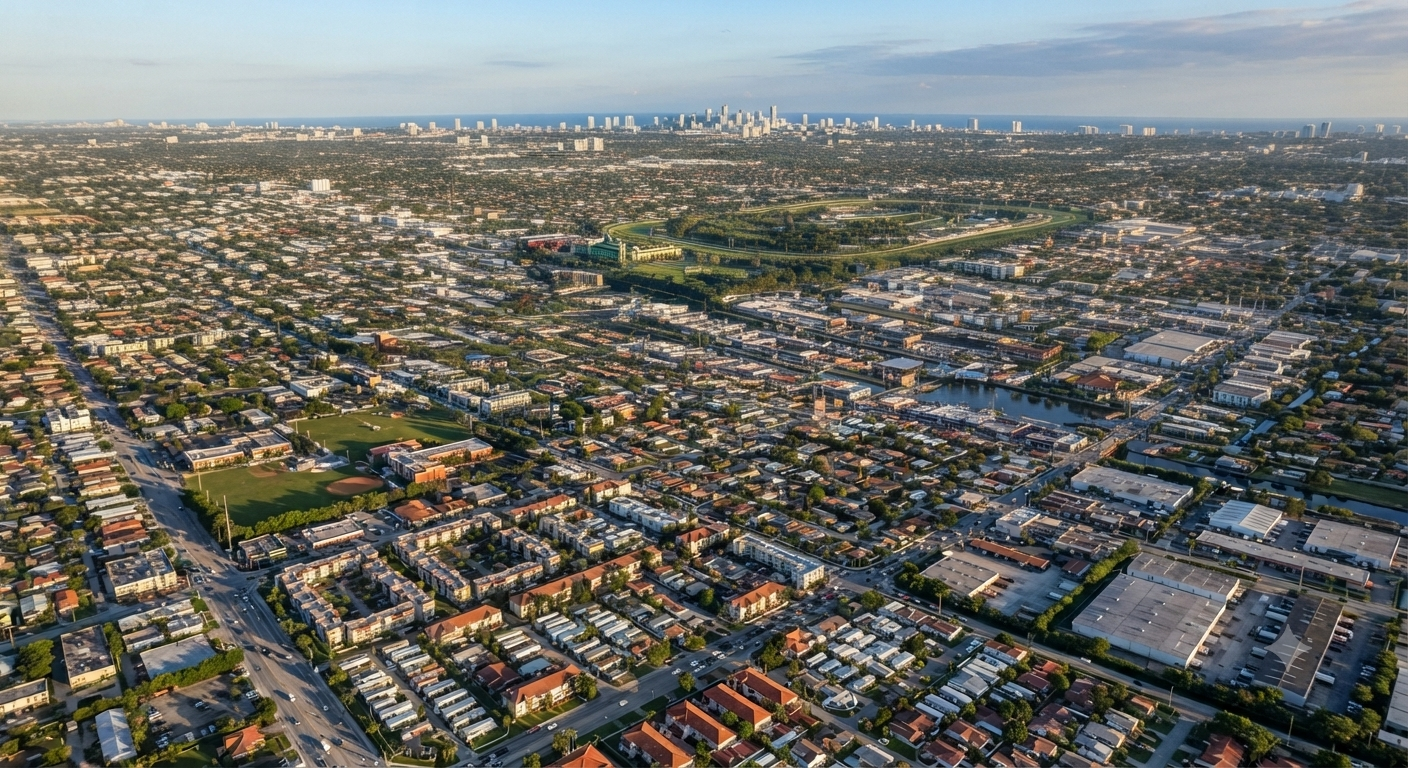
Addison County recorded 2,132 Vermont Health Connect members (5.6%), with Porter Medical Center serving patients in Middlebury.

Northwestern Medical Center serves Franklin County, with the lowest share statewide: 1,865 Vermont Health Connect members (3.7%).

Lamoille County led the state at 6.9%, with 1,804 Vermont Health Connect members; Copley Hospital serves Morrisville.

North Country Hospital in Newport serves Orleans County, where Vermont Health Connect plans covered 1,445 residents (5.2%).

St. Johnsbury's Northeastern Vermont Regional Hospital serves Caledonia County and its 1,443 Vermont Health Connect members (4.7%).

Gifford Medical Center in Randolph serves Orange County, where 1,327 residents (4.4%) held Vermont Health Connect plans.

Grand Isle County, with 395 Vermont Health Connect members (5.2%), is served by Champlain Islands Health Center.

Island Pond Health Center serves Essex County, which had the fewest Vermont Health Connect members: 265 (4.4%).

These figures are Stream RCM results reported across client practices in many specialties. Your results depend on payer mix, claim volume and current billing performance.
Most primary claims must reach Vermont Medicaid within 180 days of the service date. Claims with non-Medicare primary insurance or retroactive eligibility have 365 days. Medicare crossover claims must arrive within 180 days of Medicare’s processing date.
BCBSVT billing follows Vermont insurance law, while Vermont Medicaid follows DVHA rules. State law requires BCBSVT to pay or contest a claim within 30 days and respond to urgent prior authorization requests within 24 hours. DVHA decides standard Medicaid requests within 7 calendar days. Self-funded employer plans may differ.
No, for state-regulated commercial plans. Act 111 of 2024, enforced by the Department of Financial Regulation, bars these plans from requiring prior authorization for in-network services ordered by a contracted primary care provider, except prescription drugs. The rule does not apply to Medicare or Vermont Medicaid.
Commercial insurers in Vermont have 60 calendar days to complete credentialing after receiving a full Council for Affordable Quality Healthcare (CAQH) application. Final approval requires an active license from the Board of Medical Practice or the Office of Professional Regulation (OPR). Since June 1, 2026, new Vermont Medicaid providers may request an effective date up to 90 days before their complete application is accepted.
Stream RCM pricing starts at 2.99% of monthly collections. Your rate depends on your specialty, claim volume and the billing services you need.
Start by checking the company’s reviews, coding experience, fees and reporting options. Find out if they’ve worked with Vermont Medicaid, NGS Medicare and BCBSVT. Ask other practices in your specialty about their experience with the company.

Tell us about unpaid Green Mountain Care claims, BCBSVT denials or slow Medicare payments. Our team will review them and explain how Stream RCM can help.
Get a complimentary billing audit and discover potential revenue leaks, claim issues, and missed opportunities affecting your practice.
Find areas where your practice may be losing collectible revenue.
Get insights into your current billing and claims process.
Receive your audit without committing to a service.
Complete the short form and our billing team will review your request.