


The occurrence of hypertension is estimated to be 1.28 billion adults globally, thus, one of the most commonly recorded chronic diseases. The proper coding of ICD-10 codes, especially I10, for essential (primary) hypertension facilitates good clinical documentation, accurate health data, and proper reporting without errors in coding.
Appropriate ICD-10 coding for hypertension is crucial for accurate insurance claims, regulatory compliance, and effective revenue cycle management. For a medical billing company in the USA, accurate coding based on complete clinical documentation is essential not only to represent the patient’s health condition but also to support medical necessity, improve reimbursement, and reduce claim denial rates. This article provides a comprehensive overview of hypertension ICD-10 codes, documentation requirements, coding guidelines, and practical claim submission tips to help healthcare providers and billing professionals improve coding accuracy and compliance.
What Is the ICD-10 Code for Hypertension?
ICD-10 Code for Hypertension – I10 is assigned for hypertension that is termed as primary (essential) hypertension. Under the ICD-10-CM coding, the ICD-10 hypertension code (I10) represents the diagnosis code for patients with a history of having chronic high blood pressure with no secondary reason for its existence or any problem associated with the heart or kidneys.
I10 code for ICD-10 is defined as “Essential (primary) hypertension”. The I10 ICD-10 definition is for patients who have hypertension and it is not due to any other medical condition. Also, the code is right for use when there is uncomplicated hypertension, which means that there is no hypertensive heart disease, chronic kidney disease, or other conditions where a combination code should be used. I10 code is used in daily clinical practice for ICD 10 code I10.
It is necessary to understand the difference between the code for hypertension diagnosis and the code for blood pressure diagnosis. The code I10 is used when a diagnosis of hypertension has been made. A diagnosis of elevated blood pressure in the absence of a diagnosis of hypertension would be coded differently, such as R03.0 (Elevated blood pressure reading, without diagnosis of hypertension). Choosing the right high blood pressure ICD-10 code depends on how the provider has documented the condition.
After reviewing Hypertension ICD-10 coding, you may also want to explore ICD-10 Codes for Migraine Headaches for coding guidance on another frequently diagnosed condition.
Expert Guide: Code the hypertension always according to the diagnosed condition by the healthcare provider and not based only on blood pressure values. Look out for any comorbid conditions like heart disease or CKD and use a combination code of ICD-10-CM instead of I10.
Essential (Primary) Hypertension ICD-10 Code
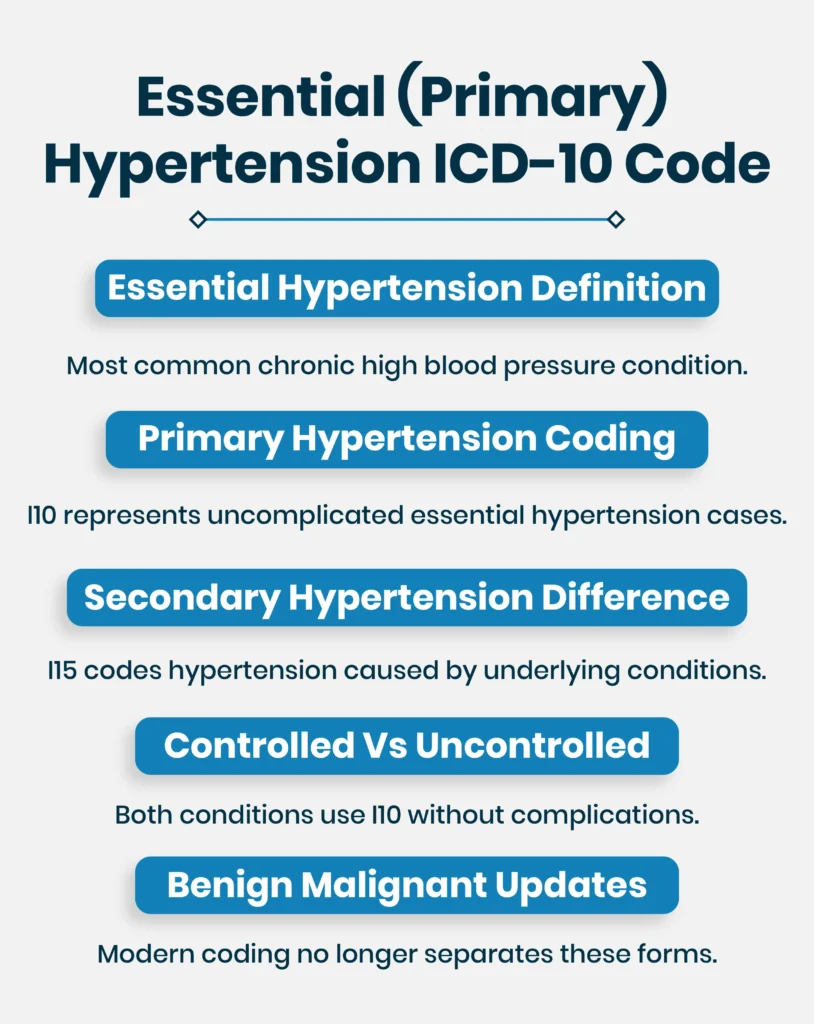
The kind of high blood pressure that is generally predominant is known as the primary or essential hypertension, which accounts for 90 to 95 percent of all cases of hypertension. Primary or essential hypertension does not have an exact cause or reason and can be caused by such factors as aging, genetics, obesity, too much salt intake, and lack of physical activity. The code for the primary or essential hypertension in ICD-10-CM is I10. Essential hypertension coding in ICD-10 can be used in cases where the physician gives a diagnosis of primary hypertension excluding hypertensive heart disease and chronic kidney disease (CKD).
Essential hypertension has a distinction from secondary hypertension as it is due to an underlying condition such as chronic renal disease, endocrine disorders or some drugs. Whereas the former can be categorized using I10, the latter falls under I15.- and entails coding for hypertension and the underlying causes. There is no distinction in ICD-10-CM between ICD-10 controlled hypertension and ICD-10 uncontrolled hypertension through codes. Regardless of whether a patient’s blood pressure is well-controlled or still high, I10 will continue being used for essential hypertension unless there is any complication or secondary cause.
Previously, there were two types of classification of essential hypertension in coding, namely benign and malignant forms, but now there is a change in the coding system under ICD-10-CM. The benign and malignant hypertension in ICD-10 no longer have different codes for essential hypertension. However, uncomplicated essential hypertension is usually coded I10, whereas, when there is an emergency, target organ involvement or diseases of heart and kidneys due to hypertension are coded based on the actual condition. The current ICD-10-CM system follows modern science, where the risk of the disease depends on the level of blood pressure.
Common Hypertension ICD-10 Codes List
The coding of hypertension involves more than just the I10 diagnostic code since patients may have other medical conditions along with hypertension such as heart disease, chronic kidney disease (CKD), respiratory illnesses, or pregnancy-induced hypertension. The choice of the right ICD-10-CM code is determined by the patient documentation, complications, and whether the hypertension is primary, secondary, or associated with some other medical illness. Below is presented the table showing the ICD-10 codes used for hypertension and the clinical uses of these codes. Healthcare providers seeking to improve reimbursement outcomes can also explore how to prevent medical claim denials and improve clean claim rate for additional billing and denial prevention strategies.
| Condition | ICD-10 Code | Brief Description |
| Essential (Primary) Hypertension | I10 | Used for primary hypertension with no documented heart disease, chronic kidney disease (CKD), or secondary cause. This is the most commonly reported hypertension diagnosis code. |
| Hypertensive Heart Disease | I11.x | Assigned when hypertension has caused heart disease, such as heart failure or cardiac enlargement. Additional codes may be required to specify the type of heart failure. |
| Hypertensive Chronic Kidney Disease (CKD) | I12.x | Used when hypertension is documented with chronic kidney disease. An additional code identifies the CKD stage. |
| Hypertensive Heart and CKD | I13.x | Applies when both hypertensive heart disease and chronic kidney disease are present. Additional codes may be needed for heart failure and CKD stage. |
| Secondary Hypertension | I15.x | Used when hypertension results from another identifiable medical condition, such as kidney disease or an endocrine disorder. The underlying condition is also coded. |
| Pulmonary Hypertension | I27.x | Assigned for elevated blood pressure in the pulmonary arteries. This condition is distinct from systemic hypertension and has separate coding guidelines. |
| White Coat Hypertension | R03.0 (when appropriate) | Used when blood pressure is elevated in a clinical setting without a confirmed diagnosis of hypertension. Coding depends on the provider’s documentation. |
| Elevated Blood Pressure (No Hypertension Diagnosis) | R03.0 | Reported for an elevated blood pressure reading when hypertension has not been diagnosed. It should not be used if the patient has confirmed hypertension. |
| Gestational Hypertension | O13.x | Used for hypertension that develops during pregnancy without significant proteinuria. Applicable only to pregnancy-related cases. |
| Hypertension in Pregnancy | O10–O16 | Covers chronic hypertension, gestational hypertension, preeclampsia, eclampsia, and other hypertensive disorders occurring during pregnancy, childbirth, or the postpartum period. |
| Blood Pressure Follow-up | Z09 (or other applicable encounter code) | Used for follow-up encounters after treatment or evaluation when supported by clinical documentation and coding guidelines. |
| Blood Pressure Screening | Z13.6 | Reported for preventive screening encounters in individuals without a confirmed diagnosis of hypertension. |
Coding Hypertension with Comorbid Conditions
The below are some of the conditions that are often associated with hypertension such as heart disease, CKD, diabetes, and secondary hypertension. There are combination codes available under the ICD-10-CM that can be used in coding patients suffering from such conditions. Proper documentation of the relationship between hypertension and associated diseases is essential for correct code assignment, accurate reimbursement, and regulatory compliance. It also plays a critical role in denial management services by reducing coding-related claim denials, minimizing payment delays, and improving first-pass claim acceptance through accurate and complete documentation.
Hypertension with Heart Disease
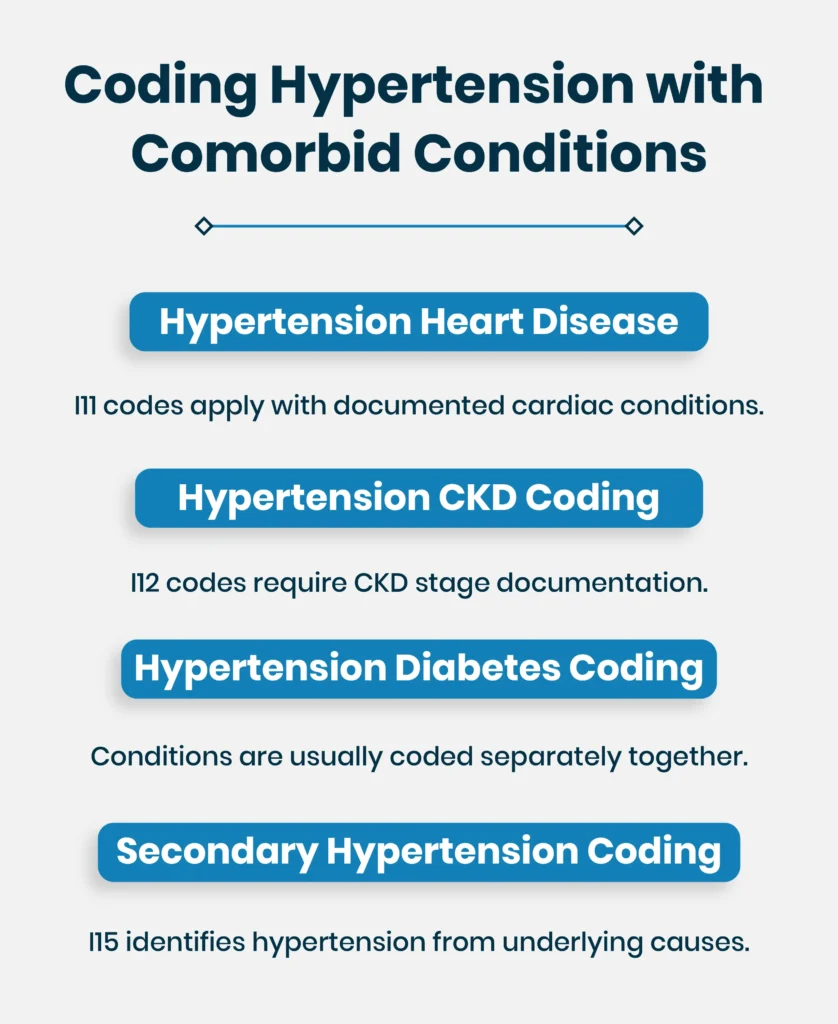
When there is a causal link established between hypertension and heart disease, instead of reporting just hypertension, ICD-10 codes for hypertensive heart disease from the I11 group are usually used. Codes for hypertension with heart disease under ICD-10 depend on the presence or absence of heart failure. It is important to specify the exact heart disease along with the heart failure type, if any, in relation to hypertension.
Hypertension with Chronic Kidney Disease (CKD)
The combination codes within the category I12 will be assigned for patients with hypertension and CKD ICD-10 where the presence of the latter has been associated with the former. The hypertensive chronic kidney disease ICD-10 code should then be accompanied by a separate code that determines the particular stage of the CKD (N18.1-N18.6 or N18.9).
Hypertension and Diabetes
Unlike hypertensive heart disease and CKD, there is usually no combination code between hypertension and diabetes for ICD-10 coding. Hypertension and diabetes are generally coded individually except for when another condition needs to be coded using a combination code. When coding the ICD-10 code for hypertension and diabetes, one needs to check the provider’s documentation to determine any complications that have arisen.
Secondary Hypertension
Hypertension secondary ICD-10 code is used to describe high blood pressure which occurs as a result of another medical condition such as renal diseases, endocrine conditions, vascular conditions, and drugs. The code for such cases is I15 while other codes for the primary cause are also included. In accordance with the ICD-10-CM coding rules, the primary code may be coded first, when necessary, before coding the secondary hypertension.
Professional Insight: In order to assign an ICD-10 diagnosis code for hypertension, one should always go through the whole patient record and see what other diseases the patient has been diagnosed with, whether it’s cardiovascular disease, kidney problems, etc. Proper coding and sequencing will help avoid denials.
Hypertension During Pregnancy
One of the main complications in pregnancy which affects 5 to 10 percent of pregnant ladies around the world is hypertension. The complications mentioned above are classified in ICD-10-CM under Chapter 15 (Pregnancy, childbirth and puerperium) using O10-O16 categories of codes. The choice of the right ICD-10 code of hypertension in pregnancy should be made depending on the type of hypertension during pregnancy: chronic or gestational.
It is necessary to identify accurately the ICD-10 diagnostic codes for pregnancy hypertension since there are different codes depending on the diagnosis. Hypertension in pregnancy is coded based on the diagnosis; for example, the patient has hypertension after 20 weeks of pregnancy without any proteinuria and is therefore coded under O13; preeclampsia on the other hand is coded under O14 and is a condition characterized by hypertension with proteinuria. The need for a complete record of the hypertension, pregnancy duration, and complications experienced by the mother is critical.
Elevated Blood Pressure vs. Hypertension
The misunderstanding between high blood pressure and hypertension is common, yet both are not the same. In cases where there are readings of high blood pressure, it may be just a temporary condition due to stress, pain, sickness, and even from physical exercise. When coding for elevated blood pressure under ICD-10, the use of code R03.0, which translates to Elevated blood-pressure reading, without diagnosis of hypertension will be done only if there is an abnormal blood pressure reading without hypertension being diagnosed.
ICD-10 code I10 for high blood pressure is given if and only if there is evidence in the record of the diagnosis of essential (primary) hypertension. In contrast to code R03.0, which indicates a diagnostic result, I10 is the medical condition per se, usually necessitating further assessment and management. Correct distinction between the two is based on medical record documentation and ensures proper billing, accurate medical record keeping, and ICD-10-CM coding compliance.
Hypertension Documentation Requirements
The accurate clinical documentation serves as the cornerstone for proper ICD-10-CM coding and medical billing. Proper hypertension documentation will guarantee that the diagnosis codes will properly represent the patient’s condition, demonstrate medical necessity, and minimize potential claim denials or coding audits. Full documentation will serve as an excellent tool for inter-professional communication and contribute to improved continuity of care for the patient.
The physicians must document specific types of hypertension; comorbidities related to it and the presence of the other conditions which can influence the code assignment process. The presence of specific information, such as CKD stage, heart disease, pregnancy status and treatment is required to be documented in order to ensure that the most accurate ICD-10-CM codes are assigned.
Hypertension Documentation Checklist
- Confirmed provider diagnosis of hypertension.
- Type of hypertension (essential/primary, secondary, pulmonary, gestational, etc.).
- Primary vs. secondary hypertension and any documented underlying cause.
- Associated heart disease, including heart failure if present.
- Chronic kidney disease (CKD) stage when hypertension is associated with CKD.
- Pregnancy status and gestational age for pregnancy-related hypertension.
- Diabetes diagnosis and any related complications documented by the provider.
- Blood pressure readings recorded during the encounter, when clinically relevant.
- Treatment plan for the patient including lifestyle changes and future recommendations.
- Drug therapy including drugs for the hypertensive patient and dose adjustment if necessary.
- Any evidence of target organ damage if present (heart, kidney, eye, and brain damage).
- Detailed clinical information to support the presence of any association between hypertension and any other disease according to ICD-10-CM requirements.
Hypertension ICD-10 Coding Guidelines
It is very important that all the coding of hypertension be done according to guidelines to ensure compliance in reporting and correct billing as well as accurate medical record documentation. The ICD-10-CM coding guidelines advise healthcare professionals and medical coders that codes must be assigned on the basis of diagnoses made, the relationship between diagnoses, and coding guidelines. In the case of hypertension, the coder must check whether the hypertension is essential, secondary, or related to heart disease, CKD, pregnancy, etc.
A combination of codes should be assigned if, according to ICD-10-CM guidelines, there is a connection between hypertension and other illnesses, including heart disease or CKD. In addition, coders should pay attention to the notes, sequencing guidelines, and other important elements before the codes are assigned. The most common problems that occur while coding hypertension in the medical billing process are the use of elevated blood pressure codes instead of hypertension codes, neglecting CKD stages, omitting heart disease, or assigning unspecified codes.
Accuracy and compliance in the coding process can be achieved through collaboration between healthcare practitioners and professional medical coding services that will ensure correct use of ICD-10-CM codes, documentation review, and coding guideline compliance.
Hypertension Claim Coding Tips
Hypertension claim coding demands correct diagnoses selection, full documentation, and a match between the patient’s diagnosis and services rendered. For effective reduction of denial of claims, healthcare providers are advised to ensure that hypertension diagnoses have proper documentation from the providers, right coding, as per the ICD-10-CM coding guidelines, and correct matching with services being billed. Proper coding will help show the medical necessity for examinations, treatment plans, medication management, and follow-ups.
Many medical practices choose to outsource medical billing services to update claim submission, advance reimbursement cycles, minimize administrative workload, and maintain accurate hypertension-related billing practices.
As far as hypertension ICD 10 coding in family medicine is concerned, providers need to document details concerning types of hypertension, conditions associated with hypertension, medications and management of patients. Documentation audits may be used to highlight areas of weakness such as failure to document complications of hypertension and use of unspecified codes in the codes.
Hypertension Management and Follow-Up Coding
ICD 10 hypertension management coding shows the provision of ongoing care to hypertensive patients, which includes follow-up visits, assessment of treatment, and medication management. In case the patient comes back for hypertension monitoring and/or management, the record must specify the condition being treated, the status of the patient’s blood pressure, the response to treatment, and the modifications that have been done. There are several ICD 10 codes for hypertension follow up depending on the reason for the visit and the findings by the physician.
Blood pressure monitoring and hypertension treatment services should be coded differently depending on whether or not the patient is screened or has been diagnosed with hypertension. The ICD 10 hypertension screening codes will be used where the patient has not been diagnosed with the condition and only comes for screening purposes while confirmed hypertension will use the relevant disease code, such as I10. Proper documentation of preventive care provides for proper coding, necessity, and continuity of care.
How Stream RCM Help with ICD 10 Hypertension
Stream RCM Support enables the improvement of the accuracy of ICD-10 coding of hypertension for healthcare facilities through their medical coding expertise, documentation review, and revenue cycle management services. Stream RCM Support’s team works to ensure accurate capture of all diagnoses related to hypertension, including essential hypertension, hypertensive heart disease, hypertension due to CKD, among others. Stream RCM Support assists in improving billing compliance, medical necessity, and reimbursement with their review of clinical documentation, coding gaps and application of ICD-10-CM guidelines.
FAQs
What is the ICD-10 code for hypertension?
The code used to diagnose primary or essential hypertension in the ICD-10 system is I10. This code will be used when identifying the medical condition of a patient suffering from high blood pressure without having any other conditions such as heart or kidney disease.
What is the difference between I10 and R03.0?
While I10 indicates an established case of essential hypertension, R03.0 is indicated when there is an abnormal blood pressure finding but there is no diagnosis of hypertension. R03.0 should be selected when there is an abnormal finding documented but no chronic hypertension has been established.
How is hypertension with chronic kidney disease coded?
For hypertension with CKD, the codes that can be used include the combination codes in I12, together with a code to indicate the stage of the CKD. For proper coding of the ICD-10-CM, it is essential to have adequate information for both conditions.
What is the ICD-10 code for hypertension with heart disease?
Heart disease due to hypertension is usually coded under the category I11. Other codes are needed to diagnose conditions like heart failure. Documentation by the provider should show that there is a link between the two diseases.
How is hypertension coded during pregnancy?
Coding for hypertensive disorders in pregnancy is done from codes O10 through O16 depending on the type of disorder. Codes vary for the following types of disorder: gestational hypertension, chronic hypertension, and pre-eclampsia.
Why is accurate hypertension ICD-10 coding important?
The coding of hypertension ICD-10 ensures claims are not rejected and there is compliance with coding regulations. Proper diagnosis coding will help improve medical documentation and show medical necessity. This will enable healthcare providers to monitor the condition of their patients.