- +1 (773) 985-1869
- info@stream-rcm.com
- 14430 Ocean Point, El Paso, TX 79938
Tired of seeing flawless skin exams end up with a rejection? With every procedure from biopsy to Mohs surgery having its own unique set of rules when it comes to coding, a single misplaced modifier could make it a 60-day payment process. Stream RCM’s dermatology billing services are developed with these issues in mind. Our medical coding system is structured based on layers of dermatology to confirm that your payments are not delayed by unnecessary claim denials.











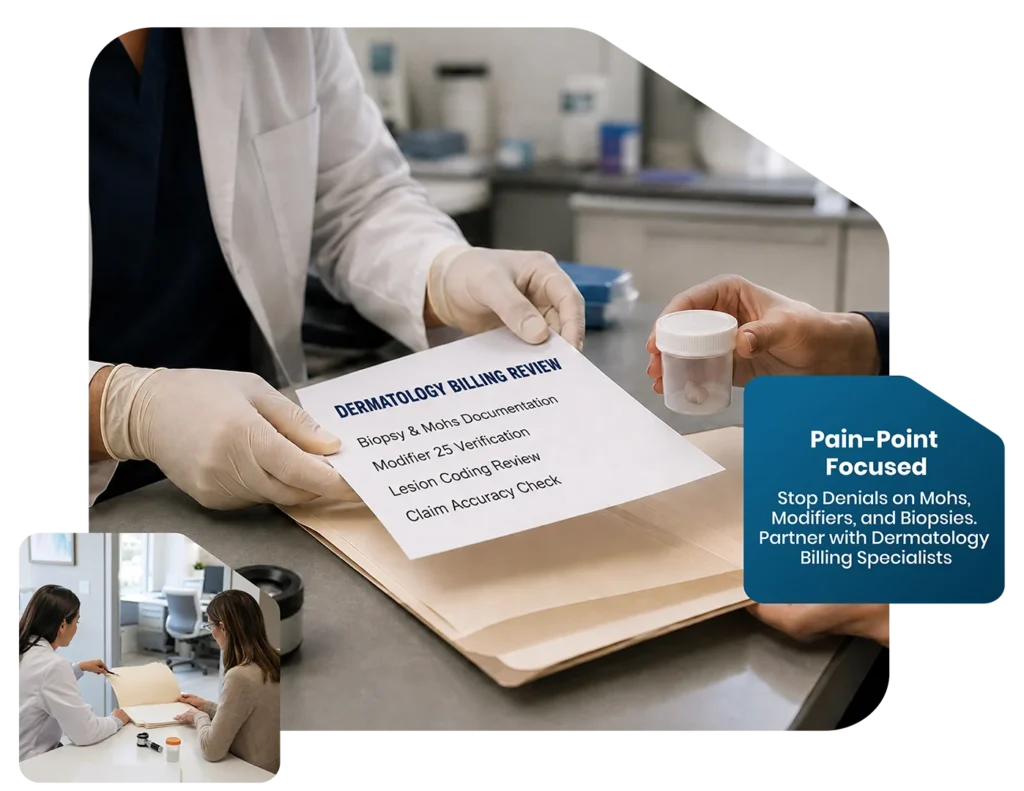
Dermatology is often considered a footnote or an addendum but our dermatology medical billing company knows each and every detail of the billing related to skin procedure which requires deep knowledge. We know the same-day biopsies, Mohs procedures that take multiple visits and cosmetic procedures. We help to avoid the problem by making sure that your claims are handled by people who are experts in dermatology right from day one. Our team already speaks the language your claims need: modifier 25, staging lesions, destruction vs. excision. We take care of all the documentation that goes along with skin checks, biopsies, and surgeries so you get paid for what you’ve already done.
Not all dermatology billing companies have expertise in sub-specialty coding. But we have a dermatology billing company, because a Mohs stage and a routine mole check shouldn’t be billed the same way, and treating them the same is exactly where revenue quietly disappears.
Acne, eczema, psoriasis, rosacea procedures as routine visits look simple until a payer downcodes the E/M level. We document and code to the true complexity of the visit, so you’re not quietly shortchanged on everyday care.
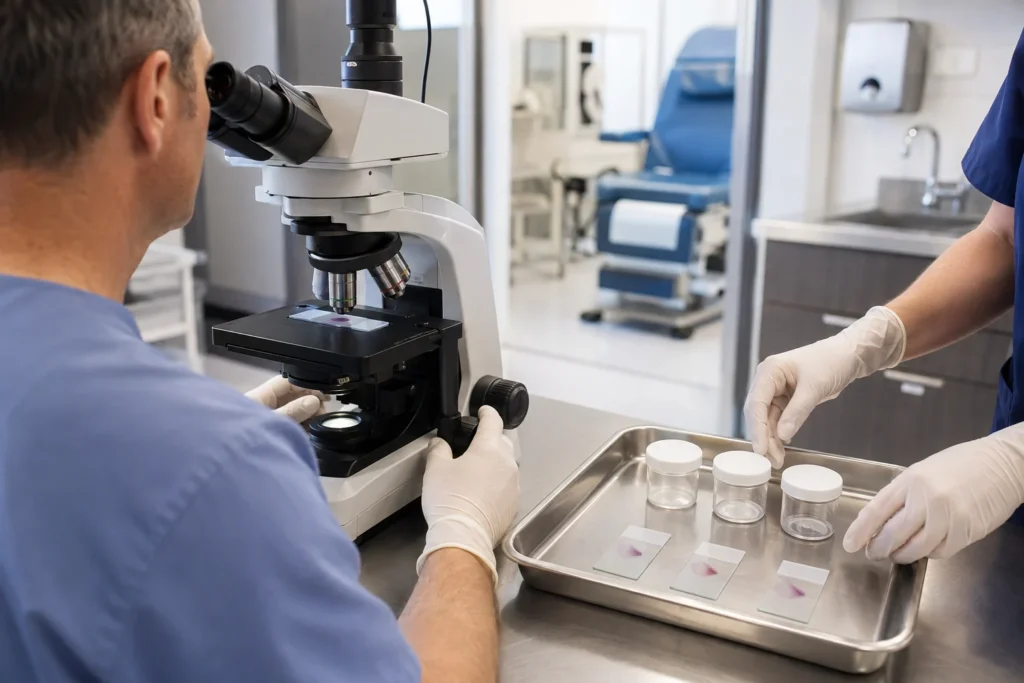
Excisions, repairs, and flap closures done in one sitting often get bundled or denied when modifiers aren’t applied precisely. Our team layers each component correctly so you’re paid for the full procedure.

Multi-stage Mohs cases are where billing errors hide best. We track every stage against the pathology note in real time, so a three-stage case doesn’t accidentally get billed, or paid, like a one-stage case.
Botox on the same day as a medically necessary biopsy? We split self-pay cosmetic charges from covered services at the coding stage, avoiding the claim confusion that turns one visit into two rejected bills.

Kids’ skin conditions carry their own coding nuance, and their own set of confused, worried guardians asking billing questions. We code accurately and communicate plainly; both matter to a pediatric dermatology practice.

Our dermatology billing associates own every step between a booked appointment and a posted payment. Here’s what that actually looks like once you’re a client.
We verify coverage and procedure-specific benefits before the visit, so a missing biologic authorization doesn't surface three weeks later as a hard denial.
Our professionals logged charges against the visit note on the day it happened. We match the diagnosis and modifier, which never reconstructed from memory a week later.
Our second coder reviews every biopsy and excision code before it leaves our hands. He catches mismatch codes; the first coder might have missed.
Scrubbed claims leave our hands within 24 to 48 hours of the visit; we keep receivables moving instead of piling up behind a submission backlog.
When a claim bounces back, we find the actual cause and correct it. Our team watches for the pattern so it stops recurring the second time.
Every remittance is posted line by line by us against the original charge, so underpayments get identified instead of quietly written off.
Partner with our experts who know dermatology inside and out. We will map practical opportunities across coding, claims, denials, and aging.

Finding a biller who already understands dermatology coding, and keeping them, has become one of the harder staffing problems in practice management. Turnover means relearning payer quirks every few months. Outsource medical billing services skips that entire runway. Stream RCM puts a specialty-trained team on your account from week one with no recruiting cycle, training period and benefits overhead. Practices that move billing to us typically feel the difference first in denial turnaround, since a dedicated team can rework a rejected claim the same week it comes back. The monthly collection becomes steady and your front desk is doing their duty again.
As a dermatology billing company, we don’t look these codes up, we solve them. Here are our coders handle nearly every single day, paired with the diagnoses they’re most often billed against.
| CPT / ICD-10 | What It Covers |
|---|---|
| 11102 / L57.0 | When a tangential biopsy is billed against actinic keratosis, our coders confirm lesion count and technique in the note first, so the claim isn't downcoded for missing detail. |
| 17000 / D48.5 | First premalignant lesion destroyed, coded against uncertain-behavior skin neoplasm, with add-on codes. We applied per additional lesion instead of bundled incorrectly into one line. |
| 17311 / C44.91 | First-stage Mohs surgery for unspecified malignant skin neoplasm. Our coders tracked them separately from every later stage so multi-stage cases never collapsed into one underpaid claim. |
| 11404 / D22.9 | Before billing a benign excision over 4 cm, we verify lesion size is documented explicitly in the chart, since that single measurement decides whether the size-tier code survives review. |
| 88305 / D04.9 | On pathology claims involving carcinoma in situ, we coordinate the professional and technical components separately, catching the split-billing errors that cause one half of the claim to be denied. |
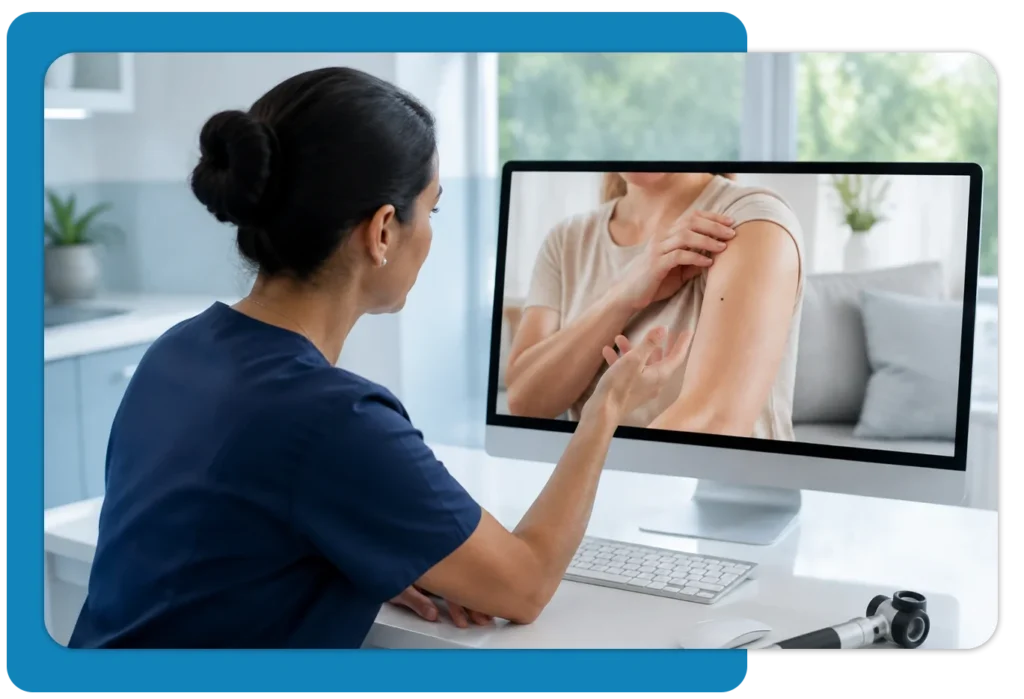
Remote skin consultations have become a routine part of dermatology practice, particularly for follow-up visits and initial triage of suspicious lesions. Medical billing for dermatology now has to account for place-of-service coding, payer-specific telehealth modifiers, and coverage rules that still shift from one state to the next. A visit billed one way in person often needs entirely different documentation and coding when delivered remotely, and payers are far from consistent about which dermatology services actually qualify. Stream RCM keeps a running list of which payers currently cover remote dermatology visits and under which codes, so practices offering virtual follow-ups aren’t speculating at rules that seem to change every few months.
Dermatology practices need billing support that adapts to how your front desk, providers, and scheduling already run that forces your team to change routines just to get paid accurately and on time.

Annual ICD-10 updates keep adding specificity requirements for skin conditions, particularly around laterality and lesion staging, and payers are analyzing dermatology claims more closely than they did just a few years back. Practices running dermatology medical billing and coding without a dedicated compliance review often don’t catch these changes until a claim is already denied or marked for a payer audit. Stream RCM reviews every code set update as it’s released and rewrites our internal coding guides before the effective date. We also keep documentation patterns aligned with current specificity requirements, so providers aren’t reworking six-month-old charts because a diagnosis code no longer clears payer standards.
There are some issues that our team sees on repeat where dermatology claims usually break down, and exactly how we shut each one down for good.
Modifiers 25 and 59 are frequently misapplied across nearly every dermatology skin procedure claim we now submit.
We carefully check every modifier pairing against documentation before submission, long before any denial ever even arrives.
Coders unfamiliar with true dermatology nuance often mix up biopsy and excision codes almost entirely, every time.
Our certified coders always code straight from the operative note itself, so guesswork never enters the process.
Biologic authorizations quietly lapse mid treatment far more often than most busy dermatology practices ever truly realize.
Through prior authorization support, we track every renewal window proactively and in advance, so approvals never quietly expire between infusion visits.
Same day biopsy and destruction claims get bundled incorrectly by insurance payers on a fairly regular basis.
We appeal every claim with strong supporting documentation and track the pattern to stop repeat denials cold.
Fuzzy lines between cosmetic and medically necessary procedures often lead straight to unnecessary claim rejections and delays.
We help providers structure clinical notes that clearly separate the two categories long before billing ever happens.
Denials that accumulate over time and remain unresolved, causing ongoing revenue loss
We actively track, appeal, and resolve denials because a large percentage of denied claims are never resubmitted, leading to avoidable revenue loss.
As a dermatology billing company, we built our process around one specialty. We are a strategic partner dedicated to the financial vitality of your dermatology practice through integrated revenue cycle management.

Our biller and coder work on your account as dermatology experts, so payer rules and modifier logic are already second nature, not something they’re learning on your claims.
You work with the same small team month after month, which means fewer repeated explanations and faster answers when a billing question comes up between patients.
We log why each claim was denied, not just that it was, so recurring issues get corrected at the source instead of resubmitted the same broken way twice.
We break down monthly reviews collections, denial reasons, and aging claims so providers know about their revenue without decoding a spreadsheet themselves.
We separate self-pay cosmetic charges from covered medical procedures at coding, preventing rejections and billing confusion entirely.
Scrubbed claims go out within 24 to 48 hours; our dermatology accounts receivable cycle averages 17 days.
Yes, we transition alongside your process, working new claims while resolving outstanding receivables so collections continue uninterrupted.
Our coding team reviews annual CPT and ICD-10 updates early and monitors every payer-specific policy change closely.

Talk to a team that only handles dermatology billing and coding.