

Remote cardiac device monitoring has changed modern cardiac devices by making it possible to continuously monitor pacemaker performance and implantable defibrillators without recurrent office visits. Precise coding serves an important function to ensure appropriate reimbursement, modernized workflows, regulatory compliance, and efficient patient management while lowering the rate of administrative inaccuracies and claim denials.
CPT Code 93296 is required for processing technical component charges of remote cardiac device monitoring services. A clear understanding of its guidelines helps cardiac device practices maximize revenue, improve documentation accuracy, and maintain compliance with payer requirements. A trusted medical billing company in USA can further streamline coding and reduce claim denials by ensuring proper charge capture and adherence to regulations. This blog explores CPT 93296, billing rules, reimbursement factors, documentation standards, and common mistakes.
Overview of CPT Code 93296
CPT Code 93296 is used for the remote technical evaluation of implantable cardiac devices over a surveillance period lasting up to 90 days. It is equipped with remote data acquisition functionality, receipt of transmissions, technician review and support, and distribution of results to the physician. The primary purpose of this code is to support correct billing for remote cardiac monitoring services while improving patient care efficiency.
The code specifically represents the technical component of remote device interrogation rather than the clinical interpretation by the physician. Healthcare providers use CPT 93296 to maintain records of patient data collection and handling device data transmitted electronically from home monitoring systems. Proper reporting of this service helps cardiac device practices maintain compliance, reduce claim denials, and optimize reimbursement processes.
CPT code 93296 is employed for a variety of implantable cardiovascular devices that comprise pacemakers, ICDs, and unleaded pacemakers. The function of these devices is to continuously track heart rhythm functions and provide vital information to healthcare providers for appropriate assessment and action. Remote monitoring plays an important role in enhancing patient safety and eliminating unnecessary follow-up office visits.
According to clinical coding references indexed in the National Library of Medicine, CPT 93296 defines remote interrogation evaluation up to 90 days for pacemakers and ICDs, including data acquisition, transmission review, technical support, and result reporting for clinical use.
Expert Insight: Remember that the CPT code 93296 should be charged once per 90 days of continuous monitoring, with transmission log files included. Good documentation and proper coding along with your professional service code can greatly help to avoid denials.
What Services Are Covered Under CPT 93296?
CPT 93296 provides coverage for necessary technical services required for remote cardiac device monitoring.
Remote Data Acquisition
The CPT code 93296 contains a description for remote data acquisition procedures whereby electronic transfer of data is done remotely using implantable cardiac devices via secure monitoring systems. This enables the medical practitioners to be able to keep track of the heart rhythm activities and ensure that the devices work well.
Device Transmission Receipt
For 93296 CPT code billing, the transmission receipt of the device entails secure acquisition of transmitted data from pacemakers, ICDs, or leadless pacemakers to the monitoring facility. Healthcare professionals will ensure that data transmission is successfully achieved, that connectivity is assured, and that patient information is correctly provided.
Technician Review and Analysis
According to the 93296 CPT code description, this involves the process of analyzing and reviewing by the technician of the transmitted cardiac device data that can contain anomalies, battery notifications, and other device performance issues. This is done by trained technicians before the data is communicated to the physicians.
Technical Support
Technical support associated with the use of CPT code 93296 would entail helping both the patient and the healthcare provider understand how to set up the device, solving transmission problems, and making sure that the device transmits information efficiently. Medical coding services are essential in recording the events so that payment can be made without difficulty. This will ensure a constant flow of cardiac device information analysis.
Distribution of Results to the Physician
Like services provided using CPT code 93297, CPT 93296 too needs an organized method of disseminating findings to doctors for analysis and further treatment plans. As soon as the technical review process is over, the reports are sent to cardiologists.
How Remote Cardiac Monitoring Works
Remote cardiac monitoring provides healthcare practitioners an opportunity to monitor implanted electronic cardiac devices, thus improving the standard of care rendered to patients.
Patient Device Data Collection
The procedure involved in the code 93296 is initiated by the automatic gathering of information from patients through their implanted cardiac devices. This information includes heart rhythm data, battery data, and device function data. The implanted cardiac devices will continuously record the heart performance of the patient to generate the information.
Secure Data Transmission
Through the 93296 CPT code, information about the device is sent securely from the home monitoring equipment to the healthcare practitioner or monitoring site. This process of wireless communication enables fewer office visits and ensures that the healthcare team gets timely information on the status of the device and cardiac status of the patient.
Technician Review and Evaluation
The 93296 CPT code description states that the service entails reviewing and evaluating the transmitted data by the technicians in order to determine if there is any alert from the device, abnormal heart rhythms, problems with the battery, and lack of connectivity.
Physician Interpretation and Follow-Up
Much like services rendered with the assistance of the 93297 CPT code, the completed monitoring report forms are reviewed by the physician for clinical decision-making and recommending further care measures where needed. This timely evaluation by the physician ensures patient safety and prevents potential health problems from becoming serious conditions.
Professional Advice: To ensure accurate CPT code 93296 billing, document all aspects of remote monitoring, from collection of data by the device to physician review of the data collected. Regular transmission reports and prompt reviews by the technician will minimize denials.
CPT 93296 vs CPT 93295: Key Differences Explained
Code 93296 is for the technical portion of remote cardiac device monitoring, while code 93295 is for the professional portion of remote cardiac device monitoring. The technical portion involves data gathering, transmission reception, technologist analysis, and technical support services. On the other hand, the professional portion entails interpreting the information and assessing the patient’s cardiac condition. CPT Code 20610 is a separate procedure code used for arthrocentesis, such as joint aspiration or injection, and is not related to cardiac device monitoring but is commonly referenced in medical billing for musculoskeletal procedures.
According to the explanation for CPT code 93296, billing for technical services is done by hospitals, monitoring centers, or other medical facilities, whereas billing for professional interpretation is done separately using CPT 93295 by physicians or cardiologists. These codes are generally used together when filing claims for remote monitoring services, while CPT 20610 remains applicable in orthopedic and procedural settings for joint-related interventions.
How to Document CPT 93296 Billing Correctly
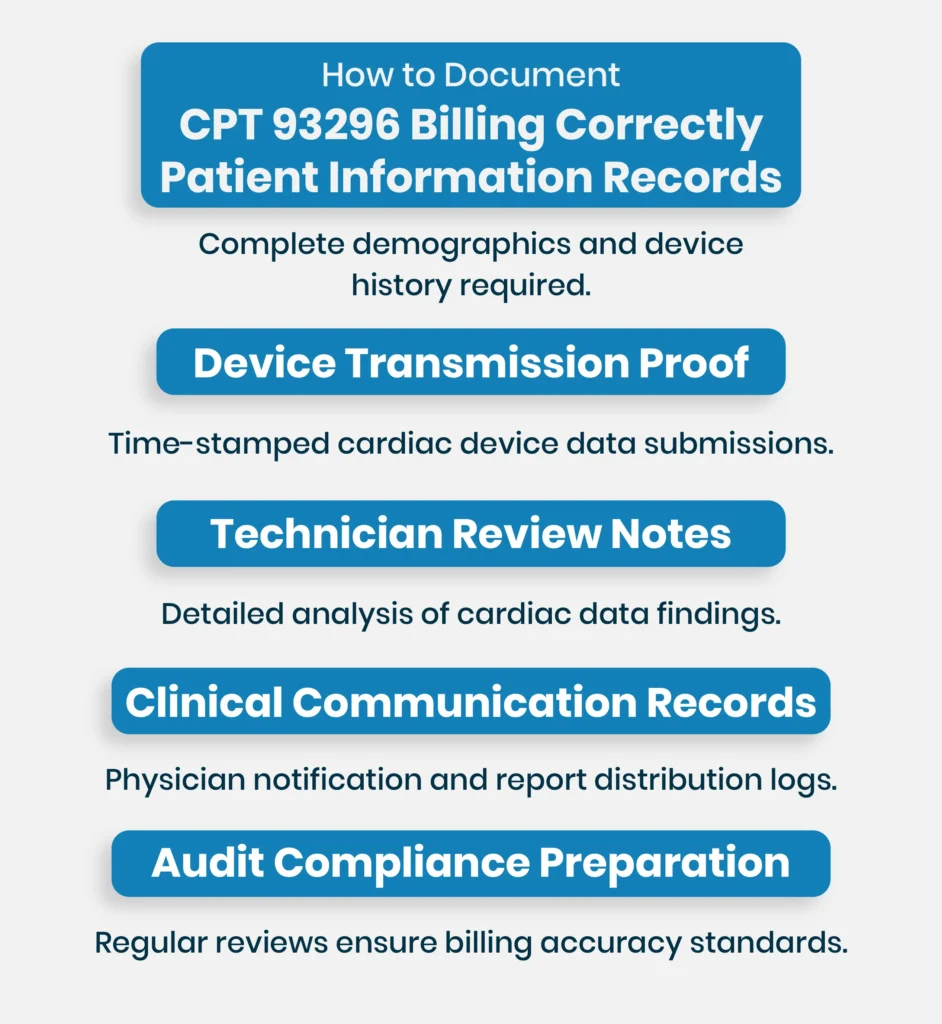
Documentation requirements for CPT code 93296 will guarantee proper billing, adherence to regulations, and good audit results in remote cardiac device monitoring procedures.
Required Patient Information
The requirements for CPT code 93296 include complete demographics for the patient, the patient’s history, the nature of the device, and the manner in which it is implanted. The inclusion of accurate patient demographics aids in the correct monitoring of remote cardiac monitoring services and proper billing practices.
Device Transmission Records
For the CPT code 93296, there must be evidence of detailed reports regarding the device transmission. This should include the time when the information was sent out. The report serves as proof that the pacemaker or ICD, or any other type of device, such as leadless pacemakers, has sent out accurate information.
Technician Review Documentation
The 93296 CPT code definition calls for detailed reporting of the evaluation and analysis done by the technologist on the cardiac data transmitted. This involves identification of any alerts generated, arrhythmias, and technical problems. Detailed documentation will show that proper evaluation was done on the data prior to interpretation by the doctor.
Compliance and Audit Readiness Tips
For code 93296 CPT, compliance is achieved through having well documented all the procedures undertaken during remote monitoring. It is necessary for the clinics to be sure that their record keeping is up to standard, in addition to conducting internal audits at intervals. This is crucial in facilitating claim processing.
Guidelines for Billing CPT Code 93296
The selection of appropriate CPT 93296 billing codes will facilitate the timely billing and reimbursement process without contravening any of the payers’ rules and regulations. The engagement of an outsource medical billing services company can assist the cardiac device practices in increasing the efficiency of their billing processes.
When to Bill CPT 93296
CPT code 93296 shall be billed whenever remote cardiac device monitoring is conducted in terms of data acquisition, transmission processing, and review by the technician. This is done once the data has been collected successfully from the pacemaker, ICD, or leadless pacemaker.
Appropriate Billing Frequency
Billing using the 93296 CPT code is usually restricted to one per monitoring period that ranges from a maximum of 90 days, unless otherwise dictated by the payers. Billing for the 93296 CPT code several times for an episode is usually discouraged, unless there are exceptions.
Place of Service Considerations
As for the place of service for code 93296, it usually occurs in outpatient or remote monitoring facilities where the evaluation is done. This can be done in a cardiac device office, hospital, or other specialized monitoring facilities. Appropriate place of service coding is important to guarantee claim billing and reimbursement.
Common Modifier Usage
Modifiers are needed during 93296 CPT code billing to differentiate between the technical and professional parts of procedures. Using commonly used modifiers makes it easy to define service responsibility among the facility and physician, preventing any issues that may lead to claim denials.
Medicare and Commercial Payer Considerations
There are payer-specific criteria for using the CPT code 93296. It is necessary to understand these rules in order not to have claim rejections. Medicare and other insurance companies have payer-specific criteria for the use of the code in question, which can help with billing and payment.
Common CPT 93296 Billing Errors to Avoid
It is necessary for proper billing without errors using CPT code 93296 to ensure correct payment, adherence to payer guidelines, and prevention of claim denials in remote cardiac device monitoring. Incorporating denial management services helps identify billing issues early, correct errors efficiently, and improve reimbursement outcomes by reducing rejected or delayed claims.
Duplicate Billing Issues
The most frequent mistake made in relation to CPT code 93296 is the duplicate billing of services for one and the same period. The problem lies in the fact that the technical component is billed repeatedly within one period of remote monitoring of the heart.
Missing Documentation
For 93296 CPT coding billing, lack of documentation or insufficient documentation is one of the most common problems that cause claims to be denied. In cases where there is no documentation concerning the transmission, the review by the technologist, or the monitoring of the patient, the claims will not be honored.
Incorrect Pairing with Professional Codes
One possible problem is when a medical coder fails to correctly couple CPT code 93296 with professional codes, like CPT code 93295. When there is a discrepancy between the technical and professional components, there may be a delay or refusal of payment from the insurance company.
Frequency Limitation Errors
Coding more than the permitted number of claims on CPT 93296 during a specified monitoring period (generally 90 days) constitutes yet another prevalent mistake. Billing beyond the limits established by the payer results in claim rejection. It is imperative to follow proper coding intervals for claims reimbursement purposes.
Expert Insight: It is always prudent to verify the billing of code 93296 for submission in light of the frequency limits, documentation requirements, and appropriate linkage with code 93295. Structured denials management processes will aid in avoiding recurring mistakes in this regard.
CPT 93296 Reimbursement Guidelines Explained
The payment for CPT code 93296 depends on various factors such as insurance policy, geographical region, and type of health facility. Payment for this code is mostly based on provision of technical remote cardiac monitoring services. Proper documentation increases chances of claims approvals and minimizes rejections.
There are many aspects that will influence the payment for CPT code 93296. These include the type of insurance, rate limitations, and following billing criteria. Different types of insurances like Medicare and commercial insurance companies might charge differently based on various considerations.
Key Benefits of CPT 93296 Remote Device Monitoring
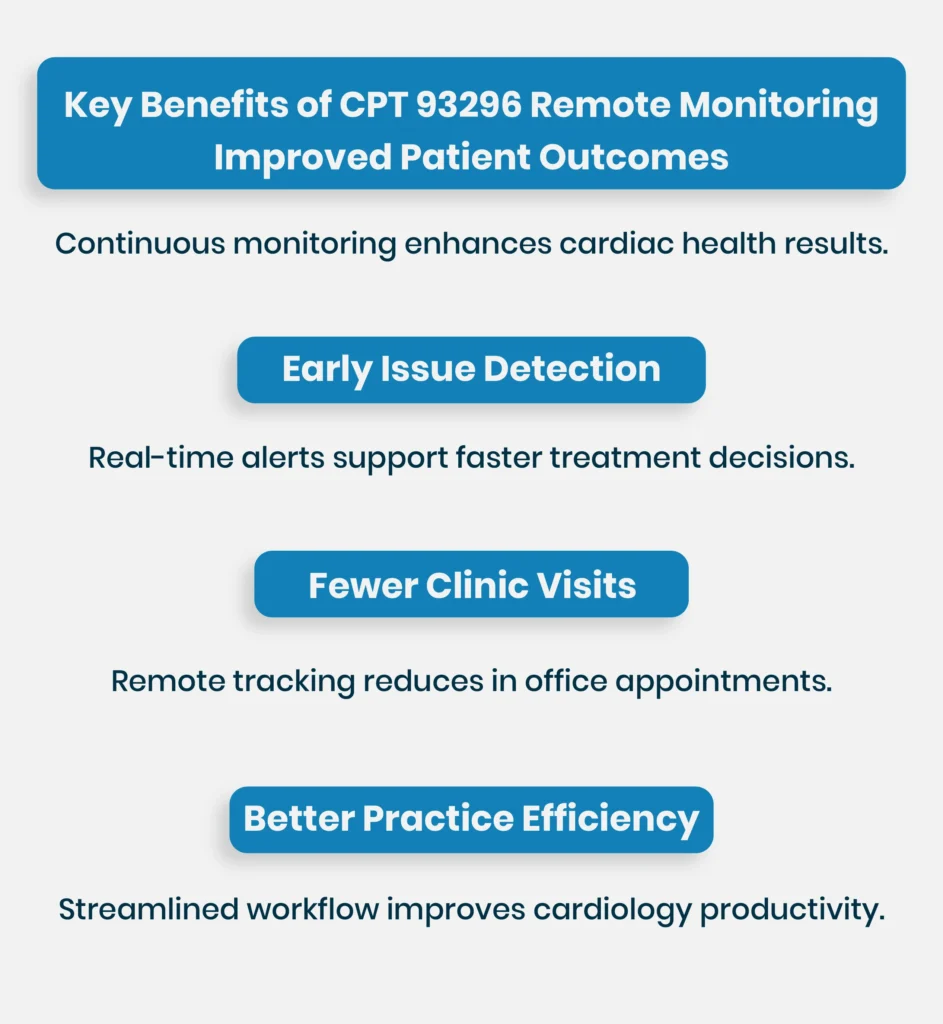
Remote cardiac device monitoring increases efficiency in the provision of health care, promotes safety, and allows continuous heart status monitoring for improved results.
Improved Patient Outcomes
Remotely monitored cardiac device function using CPT 93296 can be very helpful in improving the patient’s prognosis since there will be consistent monitoring of the device function. The earlier any problems with the heart are noticed, the easier it is to administer treatment and keep good heart health.
Early Detection of Cardiac Issues
CPT code 93296 procedure is useful in detecting problems associated with the heart in the early stages through real-time monitoring. This procedure ensures that the physician can detect arrhythmias, faulty medical devices such as pacemakers, or even abnormal heart rhythms at the earliest to ensure timely treatment.
Reduced In-Office Visits
Through the 93296 CPT code services, patients are subjected to few office visits since heart information is relayed via remote means. The result is not only the avoidance of crowding in hospitals but also the saving of time and trouble for the patients.
Increased Efficiency for Cardiac Device Practices
The remote monitoring that is done through CPT code 93296 helps increase efficiency in the cardiac device department as it makes things more streamlined and reduces the need for follow-ups. This way, both the technicians and doctors are able to have immediate information that will help in their decision-making process.
How Stream RCM Help with Cardiac Device Billing
Stream RCM enables the cardiac device practices to optimize the entire revenue cycle management process by facilitating proper coding, timely claim filing, and minimizing denials of cardiac device procedure codes such as CPT 93296. Stream RCM enables an easy claim verification process along with the charge entry process and proper documentation review. Stream RCM allows for faster reimbursement processes since it facilitates claim scrubbing and helps to detect errors in the coding process. Moreover, it enables cardiac device practices to efficiently manage payers, monitor denials, and maximize the collection process.
Frequently Asked Questions
Is CPT 93296 a technical or professional code?
CPT 93296 represents a technical component of remote monitoring of cardiac devices. This procedure includes data collection, data reception, technical review, and system management. This CPT code is not billed by the doctors since there are no interpretations involved.
Can CPT 93296 and 93295 be billed together?
Yes, the coding process of CPT 93296 and 93295 can be done together since both of the codes represent different aspects of the remote monitoring process. CPT 93296 is for technical services while CPT 93295 is for physician interpretation.
How often can CPT 93296 be billed?
CPT code 93296 will be submitted only once for each cycle of monitoring, which should generally not exceed 90 days. Repeated submission of this code may lead to denial of claim. This will facilitate compliance and appropriate payment.
Does Medicare cover CPT 93296?
Yes, CPT 93296 is covered by Medicare if the patient meets all the conditions. The Medicare covers the procedure for remote cardiac device monitoring services. However, Medicare will reimburse the service provided that the guidelines set by the Medicare are adhered to.
What devices qualify under CPT 93296?
CPT code 93296 is a cardiac function monitor process that practices an implantable device such as pacemakers, ICDs, and unleaded pacemakers to record data concerning the functioning of the heart. The device collects the data of cardiac activity and transmits it remotely for clinical assessment.
What happens if documentation is incomplete for CPT 93296?
Inadequate documentation of CPT code 93296 will make it difficult to receive payment from the payer. The lack of transmission documentation, tech notes, and patient information can cause compliance problems. Effective documentation will ensure proper billing and reduce the risk of an audit.