


Diabetes has become one of the serious global health problems, with 800 million people being affected by the disease in the adult population. Correct ICD-10-CM coding ensures that there is accurate coding for the diagnosis, the complications of the condition, and its treatment to enable effective decision-making and correct processing of claims.
This coding guide from our medical billing company provides comprehensive information about ICD-10 codes for diabetes, including the conditions they cover, documentation guidelines, coding requirements, common issues, and challenges that may arise during the coding process. It is designed to help healthcare providers and coding professionals improve coding accuracy, ensure compliance, and support proper reimbursement.
Understanding ICD-10 Codes for Diabetes
ICD-10 Diabetes Disease Coding refers to the use of standard coding for the coding of diagnoses of diabetes. This ensures correct medical documentation and communication.
What Is ICD-10 Codes?
ICD-10-CM is an abbreviation for the code set that classifies different diseases and health conditions. This code set was designed by the World Health Organization but adapted for use in the US. These codes create a universal language to document various patient health conditions, including diabetes.
In healthcare, diagnosis coding helps link documented diagnoses with medical bills. It aids in establishing medical necessity, payment, and utilization of healthcare services. Diagnosis documentation is what the healthcare practitioner determines through clinical observation and coding is what links documentation to specific alphanumeric codes. Regular medical billing audit services help healthcare organizations review diabetes-related claims, identify coding inconsistencies, and ensure that ICD-10-CM documentation supports accurate billing and compliance.
Why Diabetes Coding Requires Specificity
More information will be needed when coding the diabetes diagnosis using the ICD-10-CM diabetes coding depending on the type of diabetes, its causes, potential complications, as well as the treatment options. The codes can be used in diagnosing diabetic neuropathy, kidney diseases, high glucose levels, and other health issues related to diabetes and which might affect the treatment of patients.
Use of appropriate diabetes diagnosis codes, especially when there is enough information, is critical since it affects both the coding process and the process of reimbursement and risk adjustment of the health care institution.
Expert Insight: ICD-10 code for diabetes is based on accurate clinical documentation. Clinicians need to provide proper documentation for the type of diabetes, any complications, and treatment status in order to make the right choice of codes to avoid medical billing problems.
Overview of Diabetes ICD-10 Code Categories
The Diabetes ICD-10-CM categories are used to diagnose different types of diabetes and its causes and complications.
E08: Diabetes Mellitus Due to Underlying Conditions
E08 codes are assigned in cases where diabetes mellitus occurs due to another disease process. The E08 codes are for cases of diabetes where the disease is a consequence of other disease processes including diseases of the pancreas, endocrine diseases, and other conditions.
The documentation must correctly establish the other disease process that leads to diabetes mellitus. The association between the disease process and diabetes needs to be documented to select the appropriate code.
E09: Drug or Chemical-Induced Diabetes Mellitus
The E09 coding should be utilized whenever diabetes occurs due to exposure to a particular group of medications, substances or drugs affecting glucose metabolism. The examples include diabetes occurring as a result of taking medicines like corticosteroids.
Coding entails identifying what type of substance or drug causes diabetes and also using more codes to describe the actual manifestation of diabetes. Proper documentation of the information is important to determine the cause and effect and enable proper billing.
E10: Type 1 Diabetes Mellitus
Code E10s indicate type 1 diabetes mellitus, which usually occurs due to autoimmunity and involves damage to insulin-producing beta cells in the pancreas, leading to a complete deficiency in insulin. Proper coding will help determine the type of disease and care required.
There are codes for complications from type 1 diabetes like hyperglycemia, diabetic kidney disease, diabetic neuropathy, and eye diseases. Any relevant complications must be documented so that the right E10 code can be selected.
E11: Type 2 Diabetes Mellitus
The E11 code group is the most commonly utilized among all categories in ICD-10-CM as Type 2 diabetes makes up the vast majority of diabetes diagnoses in the world. The code group reflects the diagnosis of Type 2 diabetes with or without the presence of any complications and/or treatment conditions.
Some of the most common codes are E11.9 for the Type 2 diabetes without complications, E11.65 for the Type 2 diabetes with hyperglycemia, E11.22 for the Type 2 diabetes with diabetic chronic kidney disease, and E11.42 for the Type 2 diabetes with diabetic polyneuropathy.
E13: Other Specified Diabetes Mellitus
The codes E13 are used for other specified types of diabetes that are not covered by the categories of diabetes insipidus Types 1, 2, secondary and drug induced. The use of these codes comes in handy when a specified condition results in the occurrence of diabetes.
Some of the conditions that result in diabetes include genetic diabetes syndromes, post-pancreatectomy diabetes and other specified types of diabetes. It is important to document the conditions leading to diabetes in order to assign the right code.
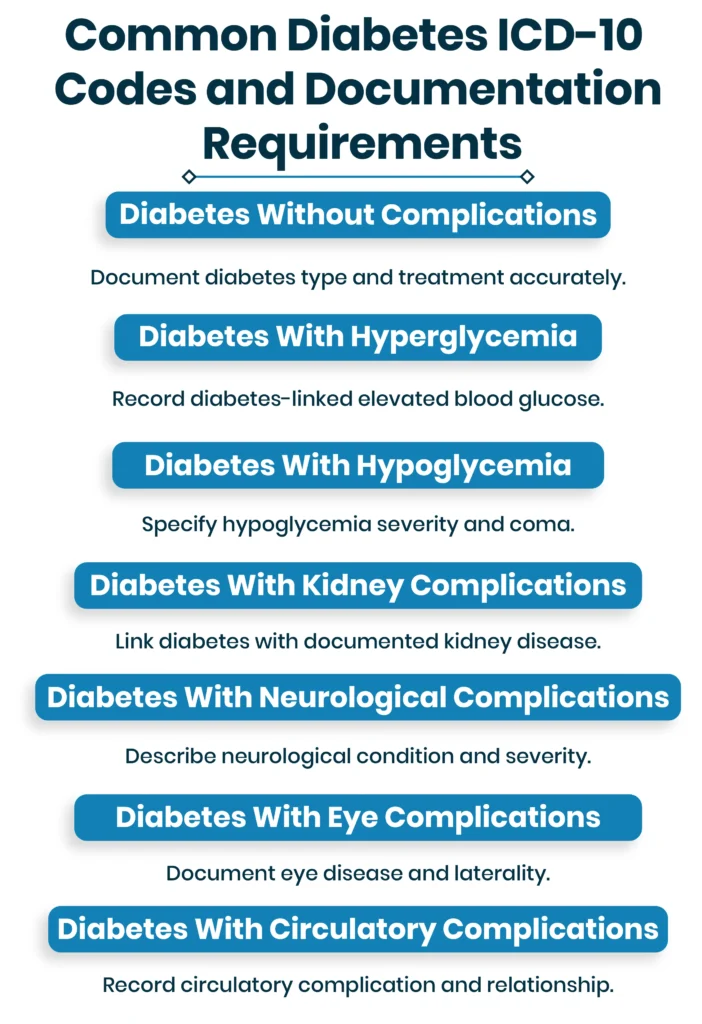
Common Diabetes ICD-10 Codes and Their Documentation Requirements
Coding of diabetes requires the determination of complications, disease severity, and clinical indicators in order to have accurate ICD-10-CM codes. Along with accurate diagnosis coding, insurance eligibility verification helps confirm patient coverage details and benefits before services are provided, reducing billing issues and improving claim processing efficiency.
Diabetes Without Complications
If there are no accompanying complications for the disease called diabetes, code E10.9 can be applied to Type 1 diabetes without complications, while E11.9 can be applied to Type 2 diabetes without complications.
There should not be any unspecified codes when more information about the condition is provided. Documentation of the exact type of diabetes, whether treated or not, and any other associated conditions will help ensure proper coding.
Diabetes With Hyperglycemia
Hyperglycemia involves the presence of high blood glucose levels that are seen with diabetes mellitus and need specific coding documentation. The ICD-10-CM system codes for hyperglycemia with diabetes mellitus differently from diabetes mellitus without complications.
Some of the common examples include E10.65 – Type 1 diabetes mellitus with hyperglycemia and E11.65 – Type 2 diabetes mellitus with hyperglycemia. Documentation from the provider should indicate the presence of the connection between diabetes mellitus and hyperglycemia.
Diabetes With Hypoglycemia
Code for diabetes with hypoglycemia is selected when hypoglycemia, which is an abnormal condition characterized by low blood sugar levels, occurs as a consequence of diabetes treatment or progression. Documentation must describe the condition of hypoglycemia, including whether it is with or without coma.
It is necessary to distinguish between hypoglycemia without coma and hypoglycemia with coma since there are different ICD-10-CM codes for both conditions.
Diabetes With Kidney Complications
Diabetes may lead to kidney issues such as diabetic nephropathy and chronic kidney disease (CKD). The proper coding of the diabetes complication code needs proof of the relationship between the diabetes and kidney conditions in the ICD-10-CM system. In case diabetes is accompanied by CKD, more codes may be needed to indicate the stage of CKD.
Diabetes With Neurological Complications
Complications of diabetes related to the nervous system include diseases such as diabetic neuropathy and peripheral nerve problems, among others that occur as a result of long periods of high blood glucose. There is special coding for these complications depending on the exact diagnosis.
It is essential to indicate the exact nature and extent of the involvement of the nervous system. Proper documentation allows proper coding and monitoring of the disease.
Diabetes With Eye Complications
Conditions associated with diabetes affecting the eyes include diabetic retinopathy and macular edema among others which develop as a result of damage to the blood vessels within the eyes. The ICD-10-CM coding system is able to identify various forms of diabetic eye diseases depending on their nature and extent of severity.
The documentation must clearly indicate retinopathy, macular disease, laterality, and other information as appropriate.
Diabetes With Circulatory Complications
Diabetes may be involved in circulatory problems like peripheral vascular disease, diabetic angiopathy, and other circulatory issues. The appropriate ICD-10-CM code needs to be used for the proper documentation of the involvement of diabetes with respect to the problem with the circulatory system.
It is important for the provider to mention the association of diabetes with circulatory problems along with the kind of complication and areas affected by the complication.
Professional Tip: Prior to selecting diabetes ICD-10-CM codes, ensure that there is documentation of diabetes type, complications, severity, and comorbidities. Well-documented records aid in selecting appropriate codes, avoid mistakes in claims, and minimize delays due to lack of documentation.
Diabetes Coding Guidelines: Key Rules to Follow
Adherence to the diabetes coding guidelines promises that the information about the disease, its problems, and treatment is precisely recorded.
Combination Coding in Diabetes
Combination codes are employed within ICD-10-CM where one code indicates both the presence of diabetes and a complication or manifestation of it. Combination codes increase the precision of coding since the codes identify the diabetic condition along with the conditions that relate to diabetes.
Diabetes is coded in combination with other conditions that are a manifestation of the disease since many of the conditions are caused by diabetes.
Use of Additional Codes
It is essential to have other codes in some cases that would give more detailed information regarding the specific diabetes-related condition or the factor that is related to the treatment process.
This can include the codes of the specific CKD stage that will define the severity of the diabetic nephropathy, the codes that reflect the use of insulin, and the codes of the prolonged use of medications. Accurate coding practices can help minimize avoidable claim rejections, while denial management services provide healthcare organizations with strategies to identify, analyze, and resolve billing issues that impact reimbursement.
Coding Diabetes and Insulin Use
Type of diabetes and insulin are two different factors that should be taken into consideration separately. A person may be suffering from Type 1 or Type 2 diabetes, and he or she may or may not need insulin depending on the development of the disease and its treatment.
Code Z79.4 should be used to identify the current use of insulin by the patient for a long time if the situation requires it, especially when it comes to the patients having diabetes who need insulin.
Diabetes and Oral Medication Use
The diabetic patient might use the oral medications to manage his condition, and his medication status is required to be coded. The information about the type of diabetes, medication, and management will be noted.
The correct coding of the medication status makes sure that the records reflect the true condition of the patient’s current treatment. This will help to differentiate diabetes treatment from diabetes conditions.
Documentation Requirements for Diabetes Coding
Complete and accurate documentation plays an important role in determining the right diabetes ICD-10-CM codes. Documentation can enable complexity in diseases to be reflected, proper billing, and patient care continuity.
Provider Documentation Checklist
In diabetic documentation, there is a need for clear identification of the type of diabetes, which may be Type 1, Type 2, or other types that have been identified. The documentation also needs to state whether complications are present or not and what kinds of complications, such as kidney, nervous system, eye, or blood flow complications.
The clinical documentation also needs to state the connection between the diabetic condition and other conditions where applicable. Other information about treatment and disease management programs can also be provided.
Common Documentation Errors
One of the most prevalent coding problems involves documenting “diabetes” without the indication of the diabetes subtype. The lack of information can lead to inaccurate coding choices and might affect the capability of fully documenting the patient’s medical problem.
Other mistakes involve failure to document the diabetes complication, failure to connect other medical conditions with diabetes, and the use of unspecified codes in spite of the clinical information.
How Providers Can Improve Documentation
Coding for diabetes may be improved by use of clear clinical terminology and diagnosis in place of vague statements. Precise clinical documentation will aid coders in selection of proper codes depending on the condition of the patient.
Clinical documentation should also indicate relationships between diabetes and any complication; up-to-date problem lists and information regarding the severity of the disease. Professional medical coding services help healthcare providers translate detailed clinical documentation into accurate ICD-10-CM codes while maintaining compliance with coding guidelines.
Common Diabetes Coding Mistakes and How to Avoid Them
Proper diabetes coding needs an analysis of clinical documents to avoid any mistakes that can negatively impact insurance payment and patient health information quality.
Coding Only Diabetes Without Complications
One such error is when one codes diabetes but leaves out any of the following complications: neuropathy, nephropathy, retinopathy or vascular issues. This error may lead to an inadequate portrayal of the medical condition of the patient.
It is imperative to capture any diabetes complications, considering that such conditions play a major role in decision-making on how to treat the condition and assess its severity and resource utilization.
Using the Wrong Diabetes Category
Wrong diagnosis of diabetes mellitus classification, for example, diagnosing Type 1 diabetes instead of Type 2 diabetes, may result in wrong medical records and billing. Different types of diabetes have their own ICD-10-CM code categories based on etiology and clinical features.
Wrong codes of secondary diabetes may arise when diabetes is caused by some disease, drug administration, or substance exposure. Proper documentation of the cause will help assign the right code category.
Missing Additional Codes
Another common mistake is neglecting to add codes for information that gives insight into managing and complications associated with diabetes. Some of these are codes for chronic kidney disease (CKD) stages, insulin usage, and chronic medication management.
Using additional codes helps paint a full picture of the clinical scenario and also assists in documenting the seriousness of the disease and the current state of treatment.
Incorrect Hyperglycemia Coding
When coding hyperglycemia, it will be necessary to differentiate diabetes with hyperglycemia from temporary/occasional elevated glucose levels. Occasional or temporary elevation of glucose does not necessarily mean that there is diabetes-related hyperglycemia.
It will be important for providers to document clearly when the hyperglycemia is caused by diabetes for proper selection of the ICD-10-CM codes. Following diabetes documentation and coding best practices is one of the most effective ways to prevent claim denials and improve clean claim rates, especially for complex chronic conditions.
Guidance for Practices: Periodic checks on coding and documentation procedures may enable you to detect common coding mistakes in diabetes claims before they are billed. Correctly keeping medical records and using appropriate ICD-10-CM codes in addition to filling documentation gaps may help.
Diabetes Coding for Medical Billing and Claims
Diabetes coding is very important in healthcare billing to ensure that there is accurate reporting of a diagnosis and that billing is justified in relation to the patient’s needs. Many healthcare providers choose to outsource medical billing services to streamline diabetes claim processing, improve coding compliance, and reduce administrative workload.
How ICD-10 Codes Affect Reimbursement
The ICD-10-CM codes are useful in determining the medical necessity by ensuring that the patient’s conditions match the services offered. Insurance companies use the codes to assess the necessity of the treatment and monitoring services in relation to the patient’s diagnosis.
Coding is also critical in the insurance approval process and risk adjustments. Proper documentation of the type of diabetes, complications, and severity of the disease ensures proper reimbursement and reporting of the patient’s complexity.
Tips for Accurate Diabetes Billing
Healthcare practitioners are advised to confirm the accuracy of documentation before filing claims. By reviewing the documentation, it is easier for practitioners to determine whether any information has been omitted and thus prevent denial of claims.
Practitioners need to avoid making diagnoses and assigning codes which have not been documented at all or which are not supported by the available documentation. Such coding audits will help in maintaining accuracy in billing for diabetes patients.
Role of Coders and Clinical Documentation Specialists
Clinical coders and clinical documentation specialists collaborate with the providers within the health care organization in order to make sure that the medical record reflects the true state of health of the patients. This facilitates the proper translation of the clinical data into the ICD-10-CM codes.
The improvement of the collaboration between the providers and the coders will contribute to higher quality documentation, lower error rate in coding, and will facilitate compliance with regulations.
ICD-10 Diabetes Coding Updates and Best Practices
Changes in the ICD-10-CM codes happen annually through the introduction of new codes, revisions in guidelines, and changes in the current codes due to medical developments, healthcare delivery practices, and regulatory requirements. Awareness about the annual updates on ICD-10-CM codes assists healthcare facilities in managing their diabetes documentation properly, thus minimizing compliance problems and claims processing errors.
Using coding tools such as ICD-10-CM Official Guidelines, encoders, and EHR support systems improves the process of coding by increasing accuracy and efficiency.
How Stream RCM Helps With ICD-10 Diabetes Coding
Stream RCM assists in accurate diabetes ICD-10 coding through the enhancement of documentation, reduction in coding errors, and provision of full patient information to healthcare organizations. Through revenue cycle management services, Stream RCM assists in proper review of diabetes diagnoses, complications, treatments, and documentation prior to submitting claims to enhance billing processes and prevent unnecessary denials. Stream RCM is able to find gaps in documentation, wrong code assignment, and non-compliance issues regarding diabetes coding through use of technology as well as knowledge of the coding process.
FAQs
What is the ICD-10 code for diabetes mellitus?
There is no specific code for diabetes in the ICD-10 classification. Codes for diabetes are determined based on its type, cause, and complications if any. The principal codes used to describe different types of diabetes are as follows: E08 Diabetes due to any other underlying condition; E09 Diabetes due to medication; E10 Type 1 diabetes; and E11 Type 2 diabetes.
What is the ICD-10 code for Type 2 diabetes without complications?
Code E11.9 in the ICD-10-CM classification system represents Type 2 diabetes mellitus without complications. This code is assigned if there is evidence that the patient has type 2 diabetes, but no associated conditions like hyperglycemia, neuropathy, nephropathy, retinopathy, or any other manifestations of the disease.
How do you code diabetes with hyperglycemia?
Diabetes mellitus with hyperglycemia is coded through diabetes complication codes when there is a link between diabetes and high blood sugar documented by the physician. These codes include E10.65 for type 1 diabetes with hyperglycemia and E11.65 for type 2 diabetes with hyperglycemia.
Can diabetes and insulin use be coded together?
Yes, it is possible to assign codes for diabetes and use of insulin if documentation shows that insulin therapy has been in progress. Diabetes coding reflects the type of the disease, whereas Z79.4 stands for chronic current use of insulin.
What documentation is needed for diabetes complications?
The documentation needs to indicate the type of diabetes, the particular complication, the severity, and the link between the diabetes and the particular complication. The complications that need to be properly documented include neuropathy, kidney problems, retinopathy, or any other vascular problems.
What are the most common diabetes ICD-10 codes used in billing?
Common codes that could be billed in case of diabetes include E11.9, Type 2 diabetes without complication; E11.65, Type 2 diabetes with hyperglycemia; E10.9, Type 1 diabetes without complication; codes related to diabetes complications such as renal, nervous system, ocular, and circulatory.