


CPT codes of physical therapy refer to standard coding systems in medical practices that are used to clearly document the services provided in rehabilitation. The services include assessment, therapeutic exercise, manual therapy, gait training, and functional activities. The physical therapist ensures that all these services are well-documented and effectively communicated to payers through the use of the appropriate CPT codes.
Effective coding and good clinical documentation are essential for the success of physical therapy clinics in terms of finances and operations. Every code should match the patient’s condition, plan, and amount of time required to perform therapeutic services. Appropriate usage of physical therapy coding and billing guidelines, such as codes from the range of 97161–97164 (evaluation), as well as codes like 97110, 97112, and 97116 (treatment), will allow avoiding claim denials and audits.
Furthermore, an extensive knowledge of billing systems in physical therapy helps clinics comply with payer requirements as well as healthcare regulations. When services provided by therapists are accurately documented, it increases the possibility of correct and timely reimbursements. In addition, partnering with a professional medical billing company in USA can further update claim processing, reduce errors, and improve revenue cycle efficiency for physical therapy practices.
What Are Physical Therapy CPT Codes?
CPT (Current Procedure Terminology) codes represent standard medical codes that are used to indicate procedures or services rendered to patients within the healthcare setting. Physical therapy CPT codes in particular are useful in indicating evaluation, treatment, and other therapeutic interventions conducted on the patients by the licensed physical therapists.
CPT codes have the most important role in assisting healthcare professionals in billing and payment for their work accurately. Proper use of physical therapy billing codes enables therapists to bill for the procedures provided effectively. Coding becomes very helpful for insurance companies in deciding whether or not a particular procedure is eligible for payment.
Proper coding also contributes greatly to compliance and financial success. The right application of physical therapy medical billing techniques ensures that claims do not get denied and are not delayed, minimizing chances of audits too. According to CMS guidelines, proper documentation and selection of the right CPT codes make sure that payers’ criteria are met and proper compensation is received for the services rendered.
Expert Guide: Always match CPT codes with thorough documentation and medical necessity. Double-check payer-specific rules, practice correct modifiers, and stay updated with CMS guidelines to minimize denials and guarantee faster reimbursement.
Physical Therapy Evaluation CPT Codes
The physical therapy evaluation code is determined through a classification process based on factors such as patient complexity, clinical decision-making, and documentation requirements. Choosing the correct code confirms accurate billing, compliance, and suitable reimbursement for services rendered. In addition, partnering with professional medical coding services can benefit, improve coding accuracy, minimize claim errors, and support well-organized revenue cycle management for physical therapy practices.
CPT 97161 – Physical Therapy Assessment
The 97161 physical therapy evaluation CPT code is applied in the case of a stable patient presenting with low clinical complexity. It involves a brief patient history, examination of one to two components of body systems, and simple decision-making. The code is usually utilized where the patient presents for an evaluation with predictable results.
CPT 97162 – Physical Therapy Evaluation
The 97162 physical therapy evaluation moderate complexity code is utilized to those patients who require a more detailed assessment due to growing clinical presentations. Therapists must document applicable patient history, examine multiple body systems, and demonstrate moderate clinical decision-making. It is normally used when patients present with functional limitations that need comprehensive treatment planning and ongoing monitoring.
CPT 97163 – Physical Therapy Evaluation for Unstable Conditions
The 97163 physical therapy evaluation high complexity code is available only for patients who are suffering from unstable conditions, substantial impairments, or multiple comorbidities. These assessments include but are not limited to extensive examinations, complete documentation, and high-level clinical judgment. These cases normally require complicated treatment strategies, increased therapist involvement, and thorough justification for reimbursement purposes for precise coding.
CPT 97164 – Physical Therapy Re-Evaluation
The 97164 physical therapy re-evaluation CPT code is applied for patients in a condition change significantly or treatment goals need reassessment. Re-evaluations necessitate updated clinical findings, reviewed care strategies, and documentation which support the requirement for additional services. Common situations include unanticipated or unexpected progress, setbacks and impediments, new symptoms, or amendments to the established treatment program.
Physical Therapy Treatment CPT Codes
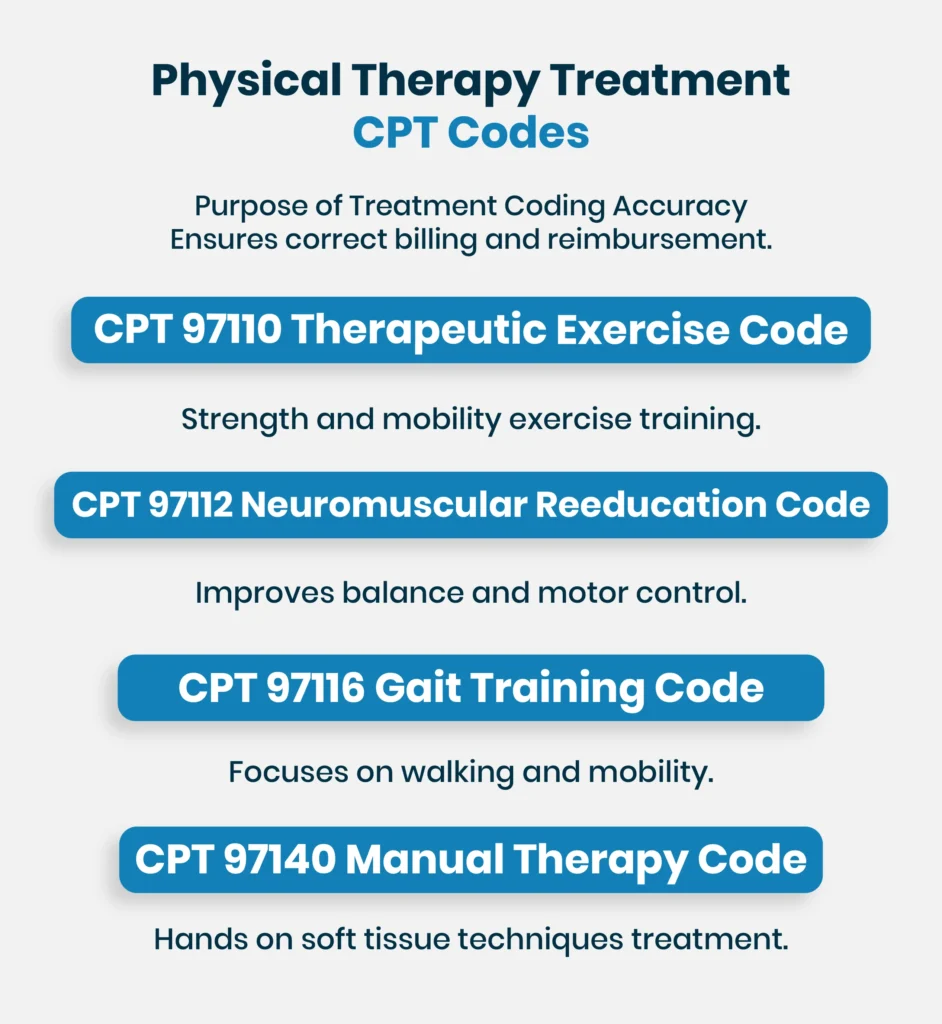
Physical therapy treatment codes cover procedures applied to achieve strength, motion, balance, functional skills, and freedom in individuals. Use of the suitable codes is important to guarantee reimbursement and documenting skilled procedures performed by physical therapists. CPT and HCPCS codes are used for telehealth billing services which ensure accurate reporting, reimbursement, and compliance with normally updated coding guidelines.
CPT 97110 – Therapeutic Exercise
The 97110 therapeutic exercise CPT code is used in planned exercise sessions to advance strength, flexibility, durability, range of motion, and practical performance. Common examples for these treatments include resistance training, stretching programs, and conditioning activities. As a timed code, billing is based on direct one-on-one patient contact which makes correct time documentation vital for reimbursement.
CPT 97112 – Neuromuscular Reeducation
The 97112 neuromuscular reeducation CPT code is used when providing therapeutic procedures aimed at improving a patient’s balance, coordination, posture, proprioception, and motor control skills. Physical therapists may apply such therapeutic approaches as postural stabilization, balance training, and movement pattern retraining among others. Documentation will reflect the techniques used and patient responses to therapy sessions.
CPT 97116 – Gait Training
The 97116-gait training CPT code is allocated for instances where therapists teach and train their patients to walk successfully. The services may include teaching patients how to walk, negotiate stairs, weight-bearing activities, and learn about assistive devices like walkers or canes. Medical necessity and skilled time invested to guide and teach patients are decisive in documenting this code.
CPT 97140 – Manual Therapy
The 97140 CPT code applies to manual therapeutic techniques that include soft tissue mobilization, myofascial release, lymphatic drainage, and joint mobilization. These interventions help minimize pain, advance tissue flexibility, and restore movement. When billed alongside certain therapeutic procedures, proper modifiers may be required to demonstrate that distinct services were rendered.
CPT 97530 – Therapeutic Activities
The 97530 therapeutic activities CPT code is used for dynamic activities that improve functional performance through purposeful movement. Lifting tasks, reaching exercises, transfer training, and activities related to work are some examples. Therapists must document how each intervention relates to functional goals and contributes to the patient’s ability to perform everyday activities carefully.
| CPT Code | Description | Brief Explanation |
| 97161 | PT Evaluation – Low Complexity | Used for stable patients with minimal clinical issues requiring basic assessment and low-level decision-making. |
| 97162 | PT Evaluation – Moderate Complexity | Used for patients with moderate impairments requiring detailed evaluation and moderate clinical judgment. |
| 97163 | PT Evaluation – High Complexity | Used for complex patients with multiple conditions needing extensive assessment and high-level decision-making. |
| 97164 | PT Re-Evaluation | Used when reassessing a patient due to significant changes in condition or treatment plan. |
| 97110 | Therapeutic Exercise | Strength, flexibility, endurance, and range-of-motion exercises performed under direct supervision. |
| 97112 | Neuromuscular Reeducation | Improves balance, coordination, posture, and motor control through specialized training. |
| 97116 | Gait Training | Focuses on improving walking ability, mobility, and use of assistive devices. |
| 97140 | Manual Therapy | Hands-on techniques like joint mobilization and soft tissue work to reduce pain and improve motion. |
| 97530 | Therapeutic Activities | Functional, task-based activities to improve daily living and physical performance. |
| 97535 | Self-Care/Home Management Training | Education and training for independence in daily activities and home exercise programs. |
CPT 97535 – Self-Care/Home Management Training
The CPT code for self-care training is 97535. Self-care training is associated with education/training that is related to the skills that patients must acquire in order to perform ADLs and health maintenance independently. Examples of services provided in self-care training include: Home exercise instructions; Adaptive equipment training; Energy conservation techniques; Personal care training.
Professional Insight: Always confirm CPT codes align with documented functional goals and time spent. Evidently distinguish between similar services like 97110 and 97530, use appropriate modifiers when essential, and maintain thorough notes to support medical necessity and avoid denials.
Timed CPT Codes in Physical Therapy
The CPT codes with a timed modifier are meant for billing treatments that are determined by the total face to face treatment time that is offered to the patient. It is necessary to know the timed billing guidelines to confirm correct physical therapy billings without any complications.
What Are Timed Codes?
Timed CPT codes in physical therapy indicate procedures charged based on the total time taken to provide therapeutic care. As opposed to untimed codes that charge only once regardless of the time involved, timed codes need the therapist to note down the actual minutes he/she spent attending to the patient.
Understanding the 8-Minute Rule
The rules regarding physical therapy billing in the context of Medicare set up the use of what is called the 8-Minute Rule for determining billable units in timed services. In principle, a minimum of eight minutes of a service needs to be performed before reporting one unit of the service. Billing mistakes include improper minute computation and allocation of time to different services.
How Many Units Can Be Billed?
When assessing reimbursement, there is a need to ensure that healthcare professionals appreciate the number of units that can be billed under physical therapy considering the total duration of treatment. This number increases with increased duration of treatments; whereby various services can be aggregated to determine the units to be billed. The justification for this needs to be well documented.
Physical Therapy Billing Guidelines
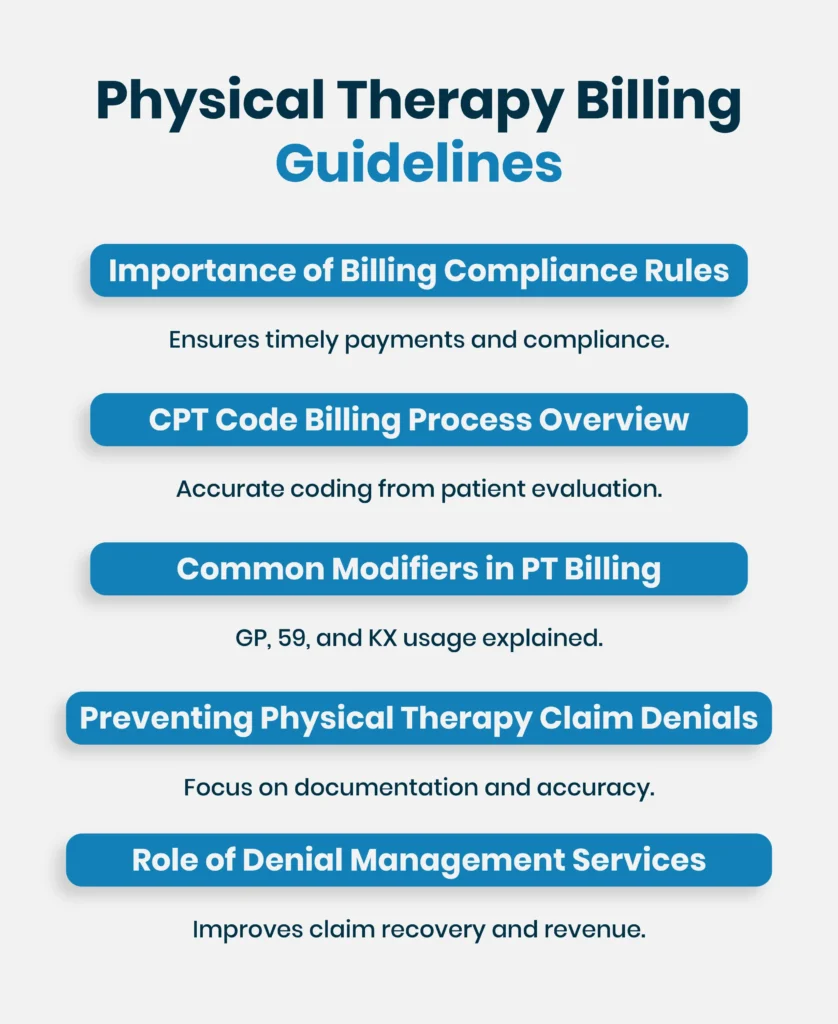
Physical therapy billing guidelines are essential for ensuring timely claim payments and compliance with legal and insurance requirements. Understanding billing processes, correct use of modifiers, and strategies to prevent claim denials is crucial for maximizing revenue in physical therapy practices. Many clinics also benefit from outsource medical billing services to update workflows, minimize administrative burden, and advance accuracy in claim submission and reimbursement management.
How Do Physical Therapists Bill CPT Codes?
Comprehending how physical therapists bill CPT codes starts by performing an in-depth assessment of the client and documenting the services provided. The therapists select the right codes for the procedures carried out, document the procedure duration and results, and file claims with the insurance companies.
Common Billing Modifiers
The appropriate use of physical therapy billing codes can sometimes include modifiers for further clarification of the type of service performed. GP is used to specify that the service provided is performed according to a physical therapy treatment plan, 59 denotes distinct procedural services, while KX is for medical necessity above certain thresholds.
Avoiding Claim Denials
Successful physical therapy medical billing involves accurate coding, comprehensive documentation, and clear demonstration of medical necessity. Common causes of claim denials include incorrect CPT codes, missing modifiers, inadequate treatment notes, and incomplete patient history documentation. Implementing strong documentation practices helps reduce denial rates and improves reimbursement outcomes. In addition, applying professional denial management services can support identifying claim issues, accurate errors quickly, and recover lost revenue while improving complete billing efficiency for physical therapy practices.
Expert Advice: Regularly audit claims before submission to ensure correct CPT codes, modifiers (GP, 59, KX), and complete documentation. This proactive step minimizes denials, improves compliance, and accelerates reimbursement cycles significantly.
Documentation Requirements for Physical Therapy CPT Codes
The documentation process is key to the whole billing process. Detailed documentation proves medical necessity, ensures the billing of the services, enhances payment, and ensures that a practice meets payer criteria without fear of an audit or rejection of claims.
Essential Documentation Elements
Documentation for physical therapy CPT codes must be comprehensive, and it includes information on the results of initial assessment, set targets for treatment, progress reports, and discharge summary. Through these, an overview of the patient’s health status, treatment plans, patient’s reaction to the treatment, and functional improvement can be easily achieved.
Documentation for Timed Codes
When billing for physical therapy treatments codes, it is important to deliver documentation regarding the total number of minutes of treatment, the amount of one-on-one patient care, and the skilled measures performed during treatment. Documentation will be required detailing what therapeutic approaches were used during treatment.
Audit-Ready Records
It is crucial that all medical billing procedures adhere to proper record keeping for audits. The records kept should be consistent and provide documentation of medical necessity. They should always contain objective medical evidence as well as accurate documentation of what services were provided to the patient.
How Stream RCM support with CPT Code for Physical Therapy
Stream RCM is one of the top billing and revenue cycle management companies in the USA specializing in assisting healthcare professionals in effective coding, claim filing, and optimizing payments. As regards physical therapy billing, this company provides the most accurate coding of CPT codes including 97110, 97112, and 97116 and assists health practitioners in minimizing billing errors and denials while maximizing their revenues. The skilled team of billers is engaged in documenting reviews, modifying claims, and adhering to insurance company rules as regards physical therapy billing and submitting claims in order to get payments as quickly as possible. With the help of Stream RCM’s skilled coders and billing systems, patients’ billing issues can be solved quickly since coding, filing claims, and dealing with denials become the job of medical coders.
FAQs
Which CPT Code Is Used for Physical Therapy Evaluation?
Physical therapy evaluations are typically billed using CPT codes 97161, 97162, or 97163, depending on the complexity of the patient’s condition and clinical decision-making required. CPT code 97164 is used for re-evaluations when a patient’s condition changes meaningfully or treatment goals require to be reassessed.
What CPT Code Is Used for Therapeutic Exercise?
CPT code 97110 is used for therapeutic exercise services intended to improve strength, flexibility, endurance, range of motion, and functional performance. This timed code requires direct one-on-one patient contact, and therapists must document treatment minutes and skilled interventions to support accurate billing and reimbursement.
What CPT Code Is Used for Neuromuscular Reeducation?
CPT code 97112 is used for neuromuscular reeducation activities that improve balance, coordination, posture, proprioception, and motor control. Therapists commonly use this code for postural training, movement retraining, and balance exercises. Detailed documentation should demonstrate the patient’s need for skilled therapeutic intervention and progress.
What CPT Code Is Used for Gait Training?
CPT code 97116 is the designated code for gait training services in physical therapy. It covers walking instruction, stair training, weight-bearing progression, and education on assistive devices such as canes, crutches, or walkers. Proper documentation should support medical necessity and the time spent providing treatment.
Is CPT 97140 Used for Manual Therapy?
Yes, CPT code 97140 is used for manual therapy techniques including soft tissue mobilization, myofascial release, manual lymphatic drainage, and joint mobilization. This code is billed for hands-on therapeutic interventions performed by a therapist and may require modifiers when reported with certain related treatment services.
What Are Timed CPT Codes in Physical Therapy?
Timed CPT codes are physical therapy procedure codes that are billed according to the amount of direct treatment time provided to a patient. Examples include 97110, 97112, and 97116. These services are generally billed using Medicare’s 8-Minute Rule, requiring accurate documentation of treatment duration.